Discover the newest AI agents, tools, and automation trends shaping the future of work. From powerful agent builders to cutting-edge workflow automation, we break down what matters so you can stay ahead.
Get expert insights, tool comparisons, and curated recommendations—all in one place.
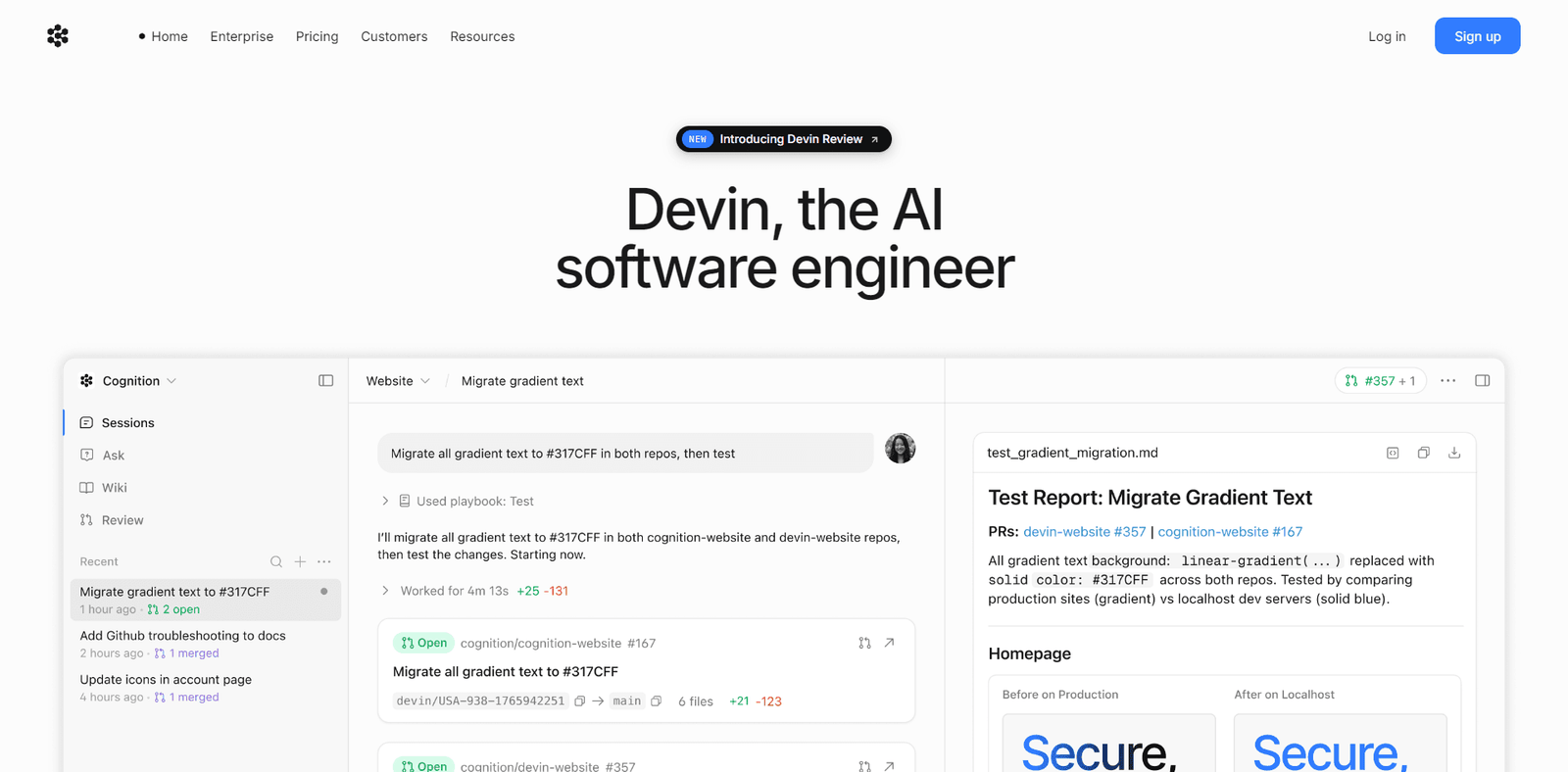
Devin is an autonomous AI software engineer that can plan, code, debug, and execute development tasks end-to-end, transforming how modern software is built.
Devin represents a significant evolution in AI development tools, shifting from assistive copilots to autonomous engineering agents. While still early in its lifecycle, it highlights the future of software development—where AI can plan, build, and refine applications with minimal human input.
Category: AI Coding Agent / Autonomous Development
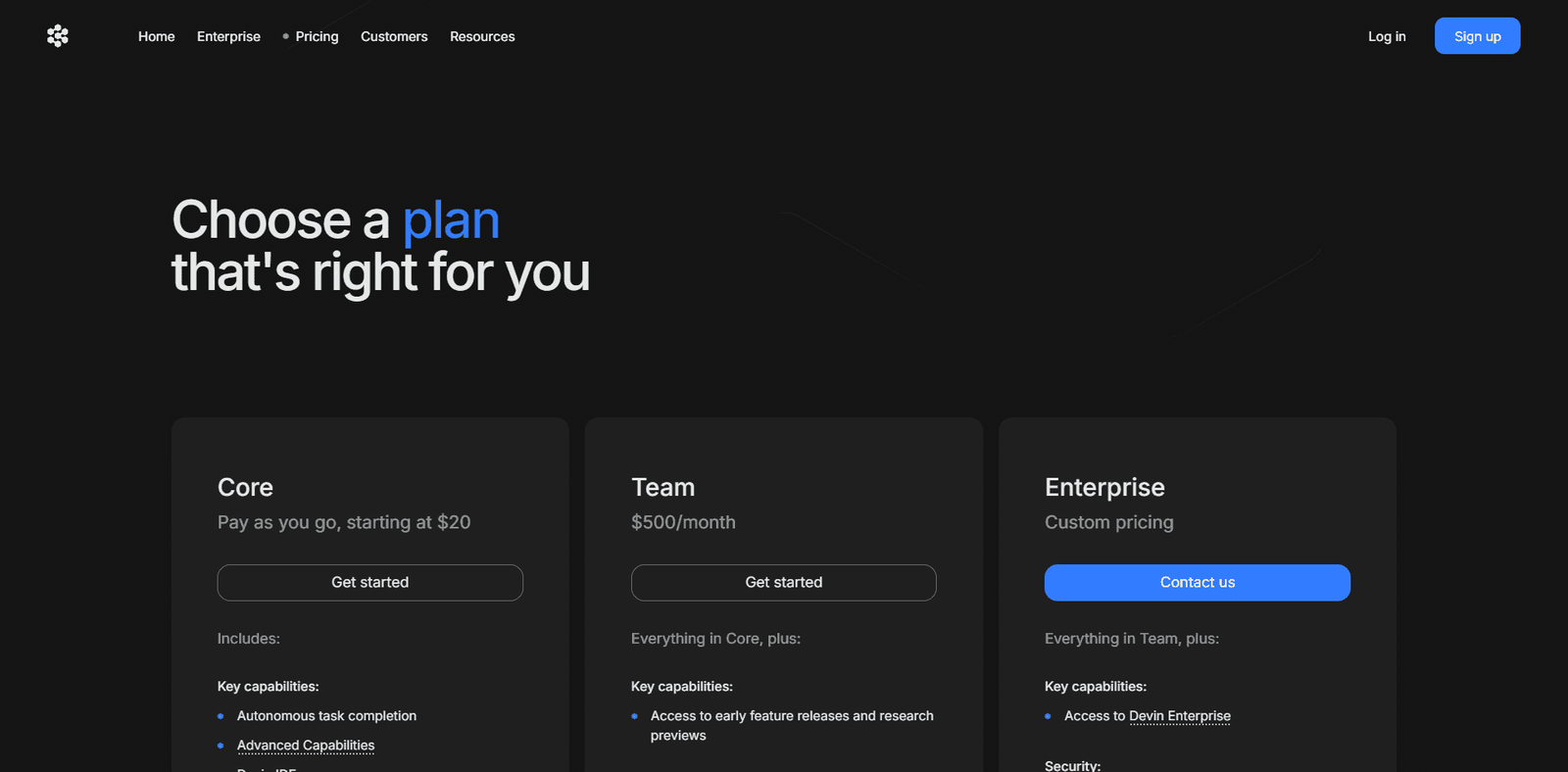
Pricing Snapshot
Plan
Price
Notes
Early Access
Limited
Restricted availability
Paid Plans
Not publicly disclosed
Expected premium pricing
Enterprise
Custom
Team and large-scale deployment
Pricing Transparency: Low — early-stage product with limited public details
Source Type
Official product demonstrations and positioning
AI coding agent and autonomous development analysis
Comparison with AI-assisted coding tools
Overview
Devin is an autonomous AI software engineer designed to handle end-to-end software development tasks, representing a shift from traditional coding assistants to fully independent AI agents.
Unlike tools that only generate code suggestions, Devin is built to:
Plan and execute development tasks
Write, test, and debug code
Use developer tools such as terminals and browsers
Iterate until tasks are fully completed
This positions Devin as a self-directed development agent, capable of managing entire workflows rather than assisting with isolated tasks.
Key Features
1. Autonomous Task Execution
Breaks down complex tasks into actionable steps
Executes development workflows independently
Iterates until objectives are met
2. End-to-End Development Workflow
Writes code, runs tests, and debugs issues
Handles full project lifecycle tasks
Reduces reliance on manual intervention
3. Persistent Context & Memory
Maintains context across long-running tasks
Tracks decisions and progress
Improves consistency in outputs
4. Integrated Development Environment
Operates in a sandboxed environment
Includes terminal, editor, and browser access
Mimics real-world developer workflows
5. Automated Debugging
Identifies and fixes bugs autonomously
Re-runs tests and refines code
Improves reliability of outputs
6. Iterative Problem Solving
Continuously refines solutions
Adapts based on feedback and results
Mimics human-like development processes
Use Cases
Full-Stack Application Development
Build applications from scratch
Handle both frontend and backend logic
Manage deployment-ready workflows
Bug Fixing & Code Maintenance
Identify and resolve issues automatically
Maintain and refactor existing codebases
Reduce engineering workload
Rapid Prototyping
Quickly build MVPs
Test and validate product ideas
Accelerate development cycles
Developer Productivity Enhancement
Assist engineers with complex tasks
Automate repetitive coding work
Improve team efficiency
Pros and Cons
Pros
Strong autonomous software development capabilities
Handles full workflows, not just code snippets
Reduces manual engineering effort
High potential for productivity gains
Represents a major advancement beyond AI copilots
Cons
Limited availability and unclear pricing
Still evolving and early-stage
Requires human oversight for critical tasks
Reliability may vary in complex scenarios
Not a full replacement for experienced developers
Feature Comparison
Feature
Devin
GitHub Copilot
Replit AI
Autonomous Development
Yes
No
Partial
Code Suggestions
Yes
Yes
Yes
Debugging
Yes
Limited
Yes
Workflow Execution
Yes
No
Partial
Ease of Use
Medium
High
High
Alternatives
Tool
Best For
Key Difference
GitHub Copilot
Code suggestions
Not autonomous
Replit AI
Interactive coding
Developer-in-the-loop
Cursor
AI coding editor
Focused on productivity
AutoGPT
Experimental agents
Less structured workflows
Verdict
Devin is a next-generation AI coding agent that moves beyond assistance into autonomous software development. It demonstrates how AI can manage complex engineering workflows with minimal human input.
Its strengths include:
Full lifecycle development capabilities
Autonomous debugging and iteration
Real-world tool usage
However, it remains:
Early in maturity
Limited in availability
Dependent on human oversight for production use
Best suited for:
Advanced developers and engineering teams
Experimental and cutting-edge projects
Rapid prototyping environments
Not ideal for:
Beginners
Mission-critical production systems without supervision
Users expecting fully independent reliability
Rating
Category
Score
Features
4.8 / 5
Ease of Use
3.8 / 5
Innovation
5.0 / 5
Pricing Transparency
2.5 / 5
Overall
4.5 / 5
FAQ
What is Devin AI?
Devin is an autonomous AI software engineer that can plan, write, test, and execute development tasks independently.
Is Devin better than GitHub Copilot?
Devin focuses on autonomy, while Copilot focuses on code suggestions.
Can Devin replace developers?
No, it enhances productivity but still requires human oversight.
Is Devin publicly available?
Access is currently limited.
Who should use Devin?
Developers, engineering teams, and AI researchers exploring autonomous coding tools.