



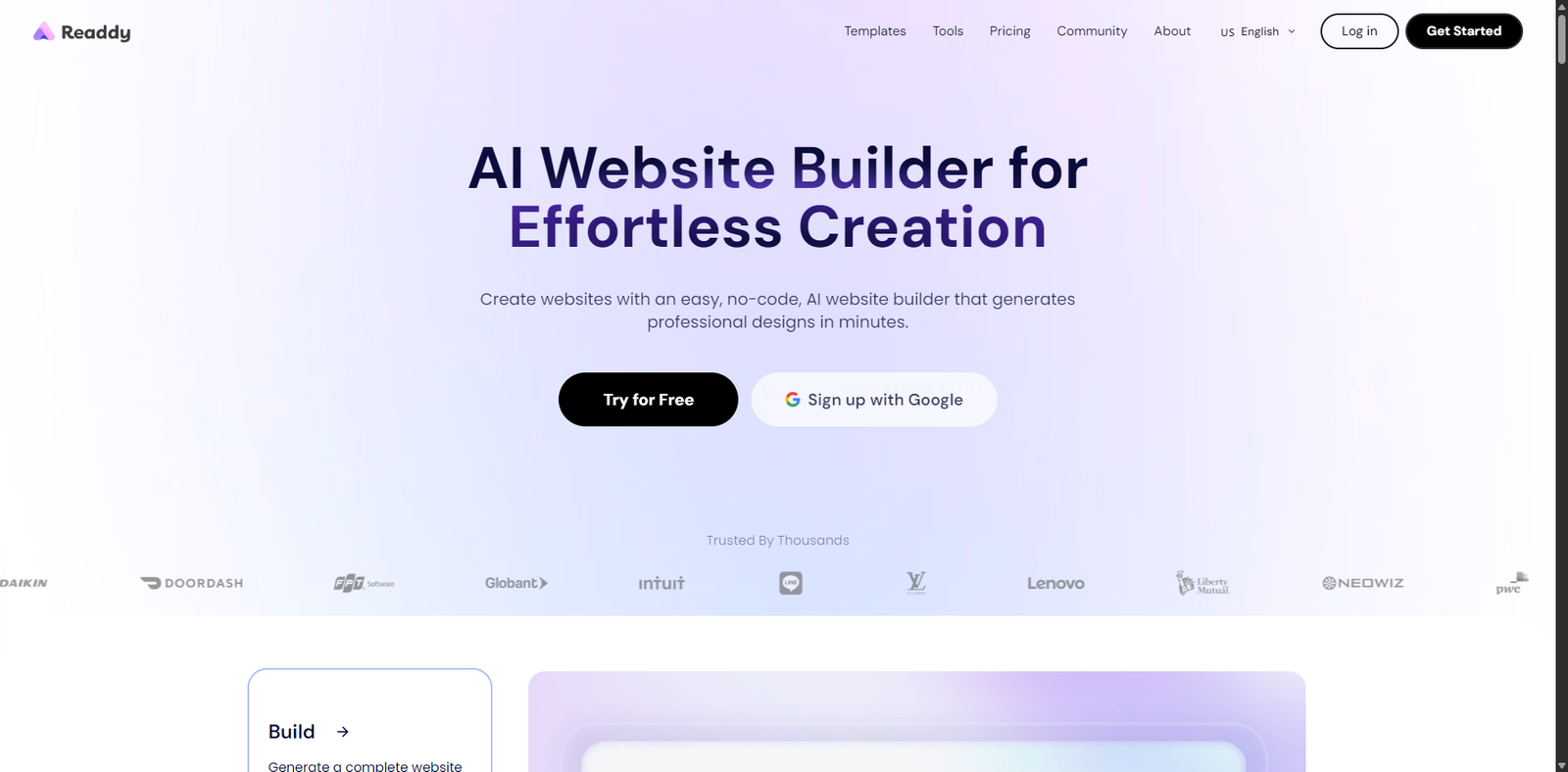
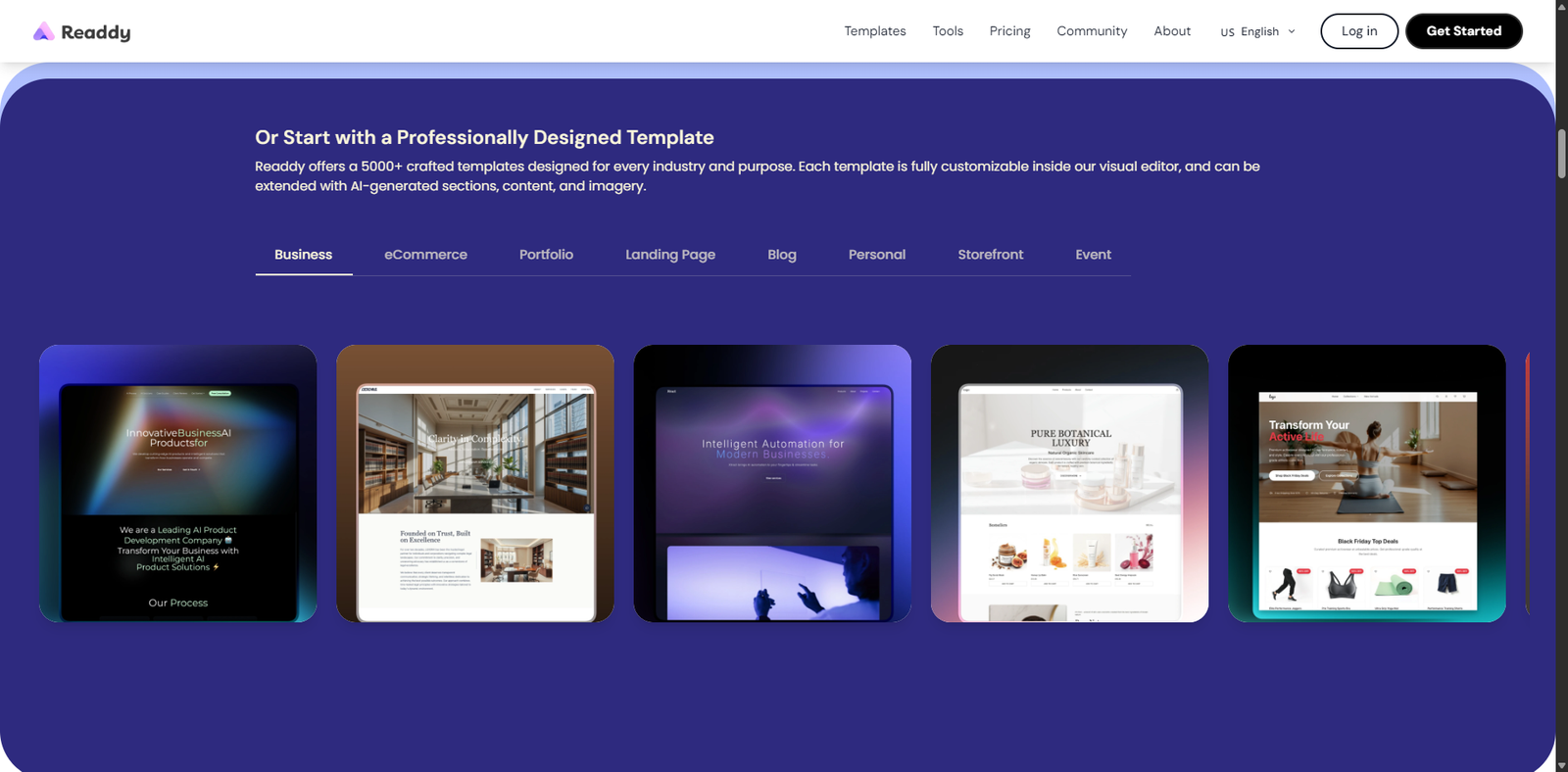
Readdy is an AI design agent that generates user interfaces and prototypes from prompts, helping teams quickly turn ideas into visual products with minimal manual design effort.
Readdy is a promising AI design agent that enables fast UI generation and prototyping through AI-driven workflows. It is particularly useful for early-stage product development and rapid experimentation, though it still requires refinement and maturity to compete with established design platforms.
Category: Design AI / AI Agent Builder
| Plan | Price | Notes |
|---|---|---|
| Free Tier | Likely available | Limited usage or credits |
| Paid Plans | Not publicly disclosed | احتمال subscription or usage-based |
| Enterprise | Custom | Advanced features and team collaboration |
Pricing Transparency: Low — limited public pricing information
Readdy is an AI design agent focused on generating user interfaces and product designs, enabling users to transform ideas into functional UI layouts and prototypes using AI.
Unlike traditional design tools that require manual creation, Readdy leverages AI to:
It positions itself as a design-focused AI agent, making it easier for designers, developers, and product teams to quickly create and refine digital interfaces.
| Feature | Readdy | Figma AI | Galileo AI |
|---|---|---|---|
| AI UI Generation | Yes | Partial | Yes |
| Prototyping | Yes | Yes | Yes |
| No-Code Approach | Yes | Moderate | Yes |
| Design-to-Code | সম্ভাব্য | Limited | Moderate |
| Ecosystem Maturity | Low | High | Medium |
| Tool | Best For | Key Difference |
|---|---|---|
| Figma AI | Collaborative design | Mature ecosystem |
| Galileo AI | UI generation | More design-focused outputs |
| Uizard | No-code design | Simpler prototyping |
| Framer AI | Website generation | Strong web focus |
Readdy is an emerging AI design agent that simplifies how users create UI and prototypes, making it especially valuable for rapid product development and early-stage design workflows.
Its strengths include:
However, limitations include:
Best suited for:
Not ideal for:
| Category | Score |
|---|---|
| Features | 4.2 / 5 |
| Ease of Use | 4.4 / 5 |
| Innovation | 4.5 / 5 |
| Pricing Transparency | 2.8 / 5 |
| Overall | 4.1 / 5 |
Readdy is used to generate UI designs and prototypes using AI, helping teams quickly turn ideas into visual interfaces.
Yes, it is designed to be accessible without requiring coding skills.
No, it assists designers but does not fully replace professional design expertise.
It may support design-to-code workflows, though capabilities depend on implementation.
Startups, designers, and developers looking to speed up UI design and prototyping.
