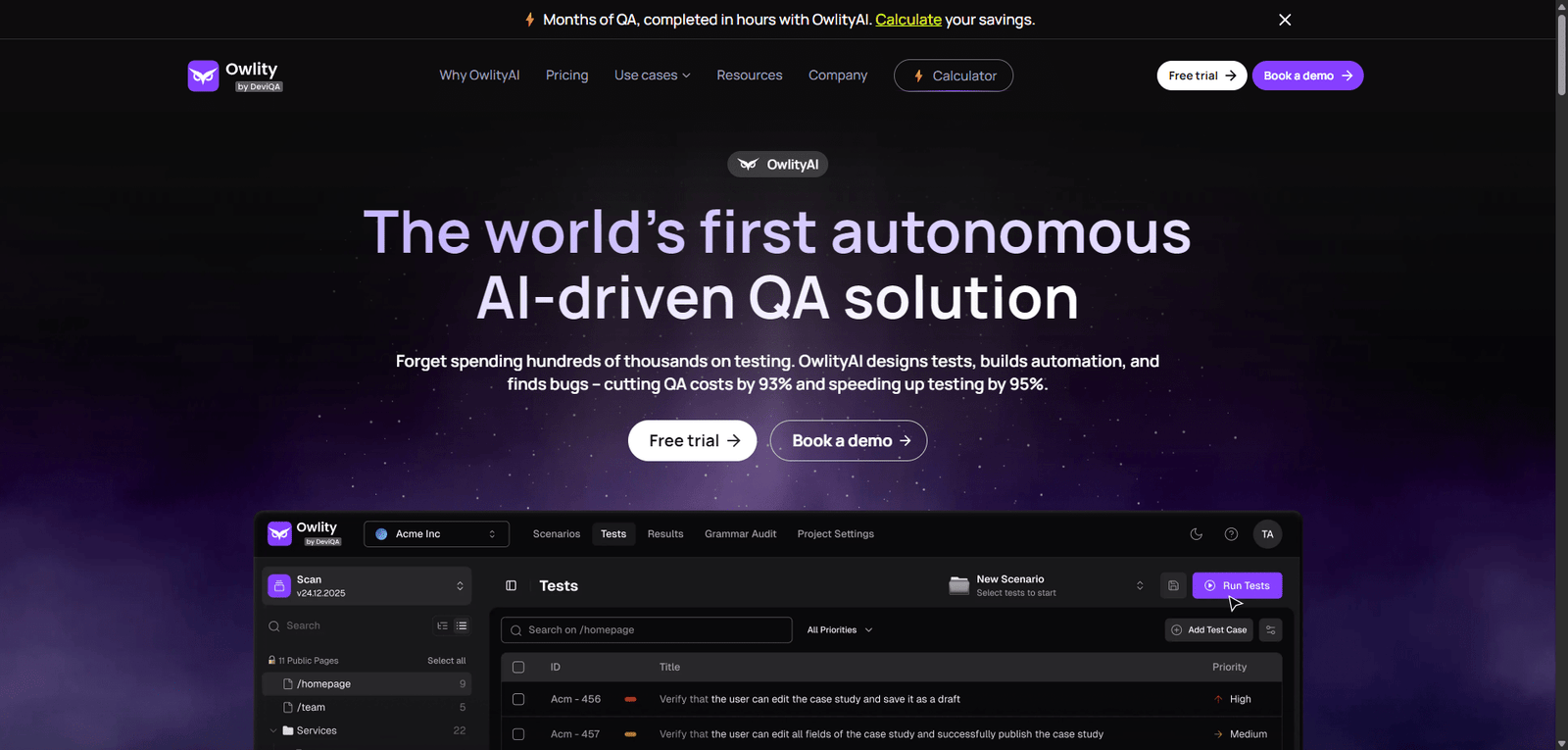




Owlity is an AI-driven QA testing platform that enables teams to automate software testing, detect issues faster, and improve product quality. It is best suited for modern development teams, offering strong value in automation and efficiency, while still requiring setup and oversight for optimal performance.
Category: QA / Testing Automation
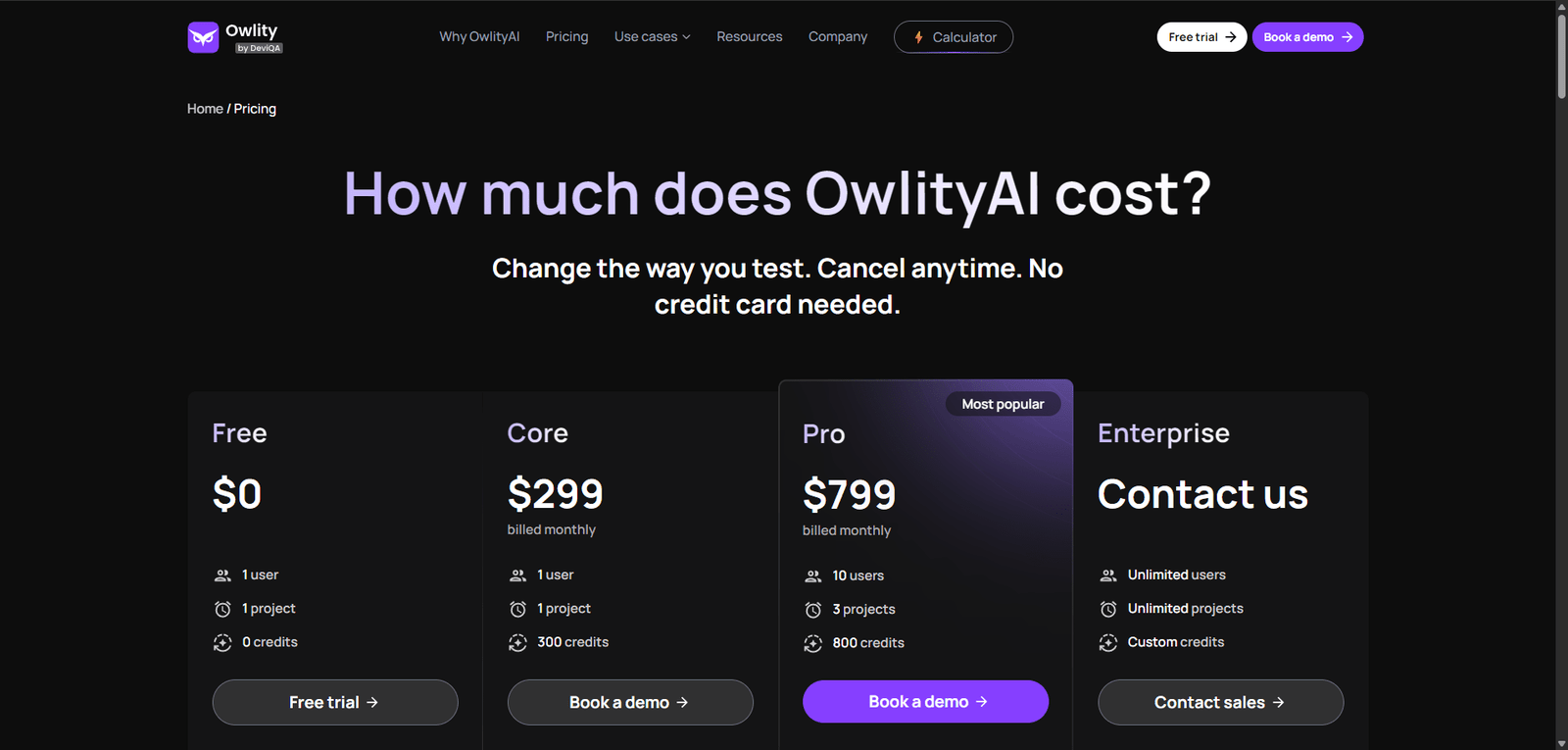
Pricing Snapshot
| Plan | Price | Notes |
|---|---|---|
| Free Trial | Available | Limited testing capabilities |
| Starter / Pro | Not publicly disclosed | Likely usage-based |
| Enterprise | Custom | Advanced testing, integrations, and scale |
Pricing Transparency: Low — pricing details are limited or custom
Source Type
- Product positioning and QA automation trends
- AI-driven software testing platforms
- Comparison with traditional and AI testing tools
Overview
Owlity is an AI-powered QA testing platform designed to automate software testing processes, improve product quality, and reduce manual QA effort through intelligent test generation and execution.
It aims to modernize QA workflows by enabling teams to:
- Automatically generate test cases
- Detect bugs and issues efficiently
- Reduce manual testing time
- Improve software reliability
Owlity positions itself as a next-generation QA automation solution, leveraging AI to accelerate testing cycles and enhance coverage.
Key Features
1. AI Test Case Generation
- Automatically create test scenarios
- Reduce manual test writing
- Improve coverage and efficiency
2. Automated Test Execution
- Run tests across environments
- Identify bugs and failures
- Speed up QA cycles
3. Bug Detection & Reporting
- Detect issues in real time
- Provide actionable insights
- Improve debugging workflows
4. Continuous Testing Integration
- Integrate with CI/CD pipelines
- Enable automated testing in development workflows
- Support faster releases
5. Cross-Platform Testing (Expected)
- Test web and potentially mobile applications
- Ensure compatibility across environments
- Improve product reliability
6. Analytics & Reporting
- Track test performance and results
- Identify recurring issues
- Optimize QA strategies
Use Cases
Software Development Teams
- Automate QA processes
- Reduce manual testing workload
- Improve release speed
DevOps & CI/CD Pipelines
- Integrate automated testing
- Ensure continuous quality checks
- Support agile development
SaaS Product Testing
- Monitor product performance
- Identify bugs quickly
- Improve user experience
QA Teams
- Enhance test coverage
- Reduce repetitive tasks
- Focus on complex testing scenarios
Pros and Cons
Pros
- Strong AI-driven test automation capabilities
- Reduces manual QA effort
- Speeds up testing cycles
- Supports continuous integration workflows
- Improves overall software quality
Cons
- Pricing not transparent
- Limited public detail on supported frameworks
- May require setup and integration
- Not a full replacement for manual QA in complex scenarios
- Learning curve for advanced usage
Feature Comparison
| Feature | Owlity | Selenium | Testim |
|---|---|---|---|
| AI Test Generation | Yes | No | Yes |
| Automated Testing | Yes | Yes | Yes |
| Ease of Use | Medium | Low | High |
| CI/CD Integration | Yes | Yes | Yes |
| Maintenance Effort | Low-Medium | High | Medium |
Alternatives
| Tool | Best For | Key Difference |
|---|---|---|
| Selenium | Open-source testing | Highly flexible but manual setup |
| Testim | AI testing | More mature platform |
| Cypress | Frontend testing | Developer-focused |
| Playwright | Modern testing | Strong automation and performance |
Verdict
Owlity is a modern AI-powered QA testing platform that helps teams automate test creation, execution, and reporting, making it a strong option for organizations looking to accelerate development cycles and improve software quality.
Its strengths include:
- AI-driven automation
- Faster testing workflows
- Integration with modern development pipelines
However, limitations include:
- Limited pricing transparency
- Potential setup complexity
- Less visibility into advanced capabilities
Best suited for:
- Software development teams
- SaaS companies
- DevOps and QA teams
Not ideal for:
- Small projects with minimal testing needs
- Teams requiring full manual QA control
- Users needing open-source solutions
Rating
| Category | Score |
|---|---|
| Features | 4.4 / 5 |
| Ease of Use | 4.2 / 5 |
| Automation | 4.6 / 5 |
| Pricing Transparency | 2.9 / 5 |
| Overall | 4.3 / 5 |
FAQ
What is Owlity used for?
Owlity is used to automate software testing and improve QA workflows using AI.
Does Owlity replace manual testing?
No, it reduces manual work but complements human QA efforts.
Is Owlity suitable for CI/CD pipelines?
Yes, it supports integration with modern development workflows.
Does Owlity require coding?
It may offer low-code features, but some technical setup could be required.
Who should use Owlity?
Developers, QA teams, and DevOps engineers