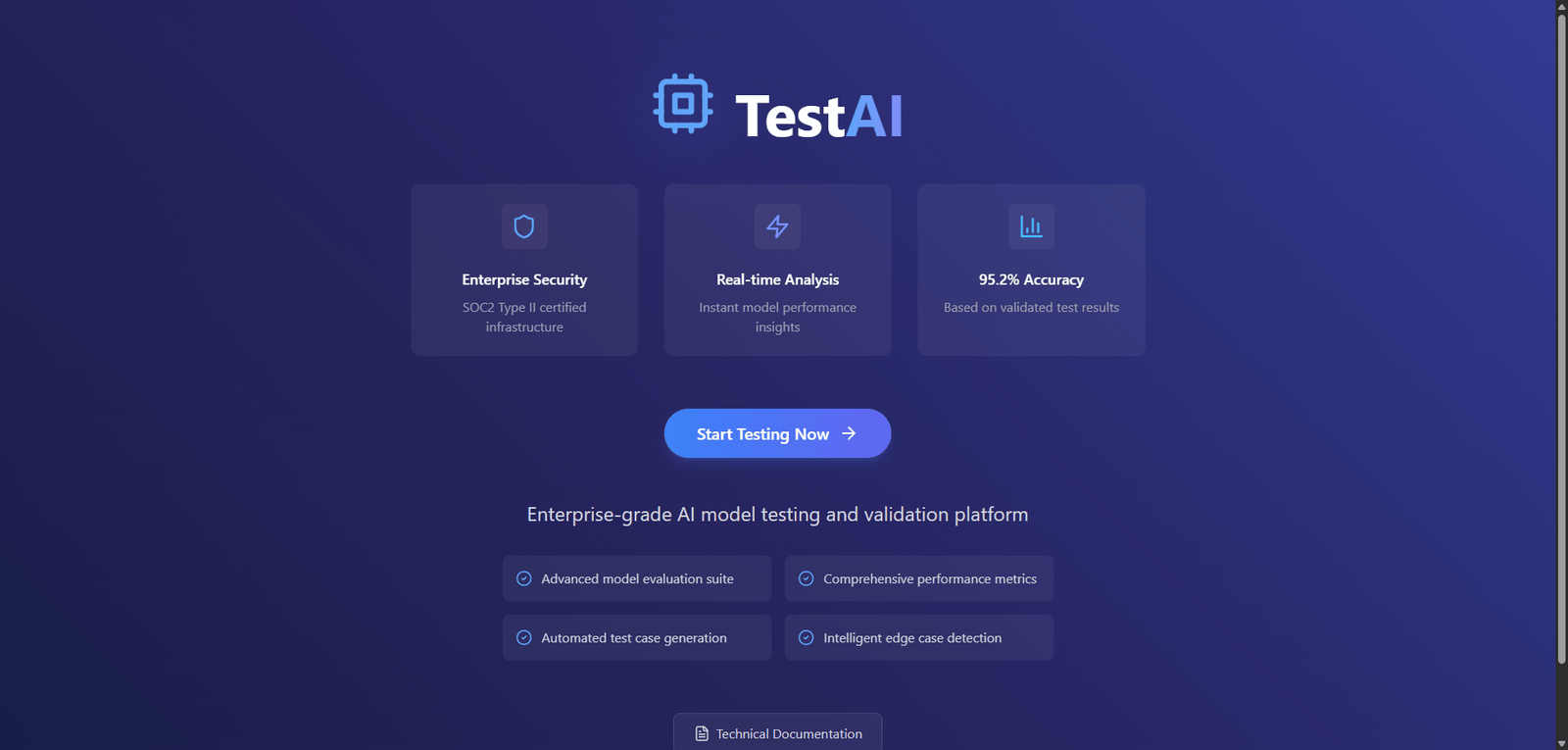
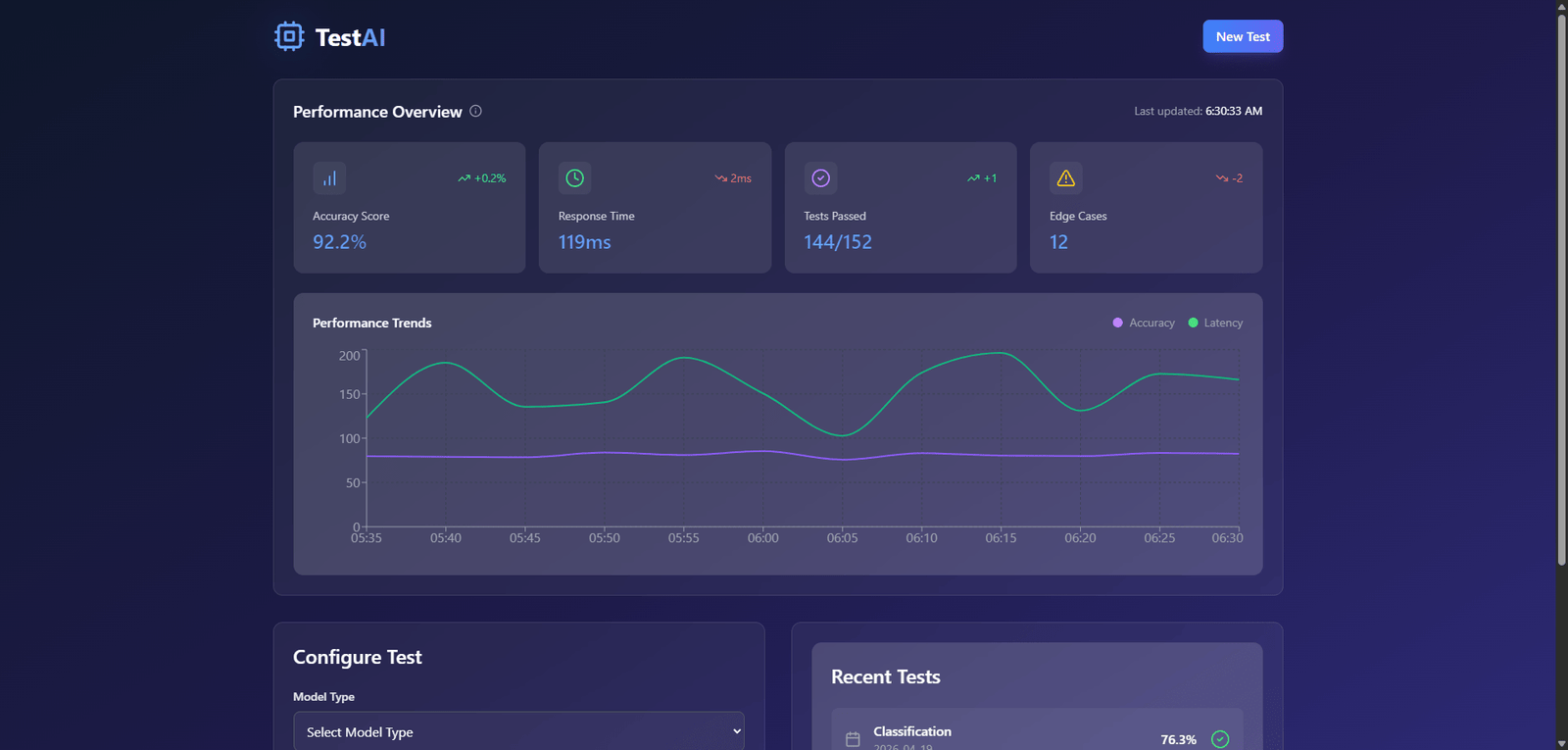

TestAI is an AI-powered QA automation platform that enables teams to automate testing workflows, improve coverage, and accelerate software delivery. It offers strong value for modern development teams, while still requiring setup and human oversight for complex scenarios.
Category: QA / AI Test Automation
Pricing Snapshot
| Plan | Price | Notes |
|---|---|---|
| Free Trial | Available | Limited testing and features |
| Paid Plans | Not publicly disclosed | Likely usage-based or subscription |
| Enterprise | Custom | Advanced automation and integrations |
Pricing Transparency: Low — limited publicly available pricing details
Source Type
- Product positioning and AI QA trends
- Autonomous testing and software quality tools
- Comparison with modern AI and traditional QA platforms
Overview
TestAI is an AI-powered QA testing platform designed to automate software testing through intelligent test generation, execution, and optimization, helping teams accelerate development cycles and improve product quality.
The platform focuses on:
- Autonomous test creation using AI
- End-to-end testing workflows
- Reduced manual QA effort
- Continuous testing in modern pipelines
TestAI positions itself as a next-generation testing solution, moving beyond script-based QA toward self-improving, AI-driven testing systems.
Key Features
1. Autonomous Test Generation
- Automatically generate test cases based on application behavior
- Reduce reliance on manual scripting
- Improve test coverage
2. End-to-End Testing Automation
- Validate full user journeys
- Ensure product stability across workflows
- Detect issues early
3. Continuous Testing & CI/CD Integration
- Integrate with development pipelines
- Enable continuous testing during deployments
- Support faster release cycles
4. Self-Healing Tests (Expected)
- Adapt to UI or logic changes
- Reduce maintenance effort
- Improve long-term test reliability
5. Bug Detection & Reporting
- Identify issues automatically
- Provide actionable insights
- Speed up debugging
6. Analytics & QA Insights
- Monitor test performance
- Track failures and trends
- Optimize QA strategies
Use Cases
SaaS Product Testing
- Validate features and workflows
- Ensure reliable releases
- Improve product quality
DevOps & CI/CD Pipelines
- Automate testing in pipelines
- Reduce deployment risks
- Enable continuous delivery
QA Team Optimization
- Reduce manual testing workload
- Improve efficiency and coverage
- Focus on complex scenarios
Startup & Agile Teams
- Ship faster with limited QA resources
- Maintain product quality
- Scale testing processes
Pros and Cons
Pros
- Strong AI-driven autonomous testing capabilities
- Reduces manual QA effort significantly
- Improves test coverage and efficiency
- Supports modern CI/CD workflows
- Scalable for growing teams
Cons
- Pricing not transparent
- Limited public detail on supported frameworks
- May require setup and onboarding
- Not a full replacement for manual QA
- Ecosystem maturity may vary
Feature Comparison
| Feature | TestAI | Testim | Cypress |
|---|---|---|---|
| AI Test Generation | Yes | Yes | No |
| End-to-End Testing | Yes | Yes | Yes |
| Self-Healing Tests | Expected | Yes | No |
| CI/CD Integration | Yes | Yes | Yes |
| Ease of Use | Medium | High | High |
Alternatives
| Tool | Best For | Key Difference |
|---|---|---|
| Testim | AI QA testing | More mature platform |
| Cypress | Frontend testing | Developer-focused |
| Playwright | Modern automation | Strong cross-browser support |
| Selenium | Open-source QA | Flexible but manual-heavy |
Verdict
TestAI is a modern AI QA testing platform that focuses on autonomous test generation and end-to-end automation, making it a strong option for teams aiming to reduce manual testing and accelerate development cycles.
Its strengths include:
- Automated test creation
- Continuous testing capabilities
- Scalable QA workflows
However, limitations include:
- Limited pricing transparency
- Setup and onboarding requirements
- Less maturity compared to established tools
Best suited for:
- SaaS and product teams
- DevOps and QA engineers
- Startups scaling development
Not ideal for:
- Small projects with minimal QA needs
- Fully manual testing workflows
- Teams requiring open-source-only solutions
Rating
| Category | Score |
|---|---|
| Features | 4.5 / 5 |
| Ease of Use | 4.2 / 5 |
| Automation | 4.7 / 5 |
| Pricing Transparency | 2.8 / 5 |
| Overall | 4.4 / 5 |
FAQ
What is TestAI used for?
TestAI is used to automate software testing, including test generation, execution, and optimization.
Does TestAI support end-to-end testing?
Yes, it supports full end-to-end testing workflows.
Is TestAI suitable for CI/CD pipelines?
Yes, it integrates with modern development pipelines.
Does TestAI replace manual QA?
No, it complements manual testing but does not fully replace it.
Who should use TestAI?
Developers, QA teams, and SaaS companies.