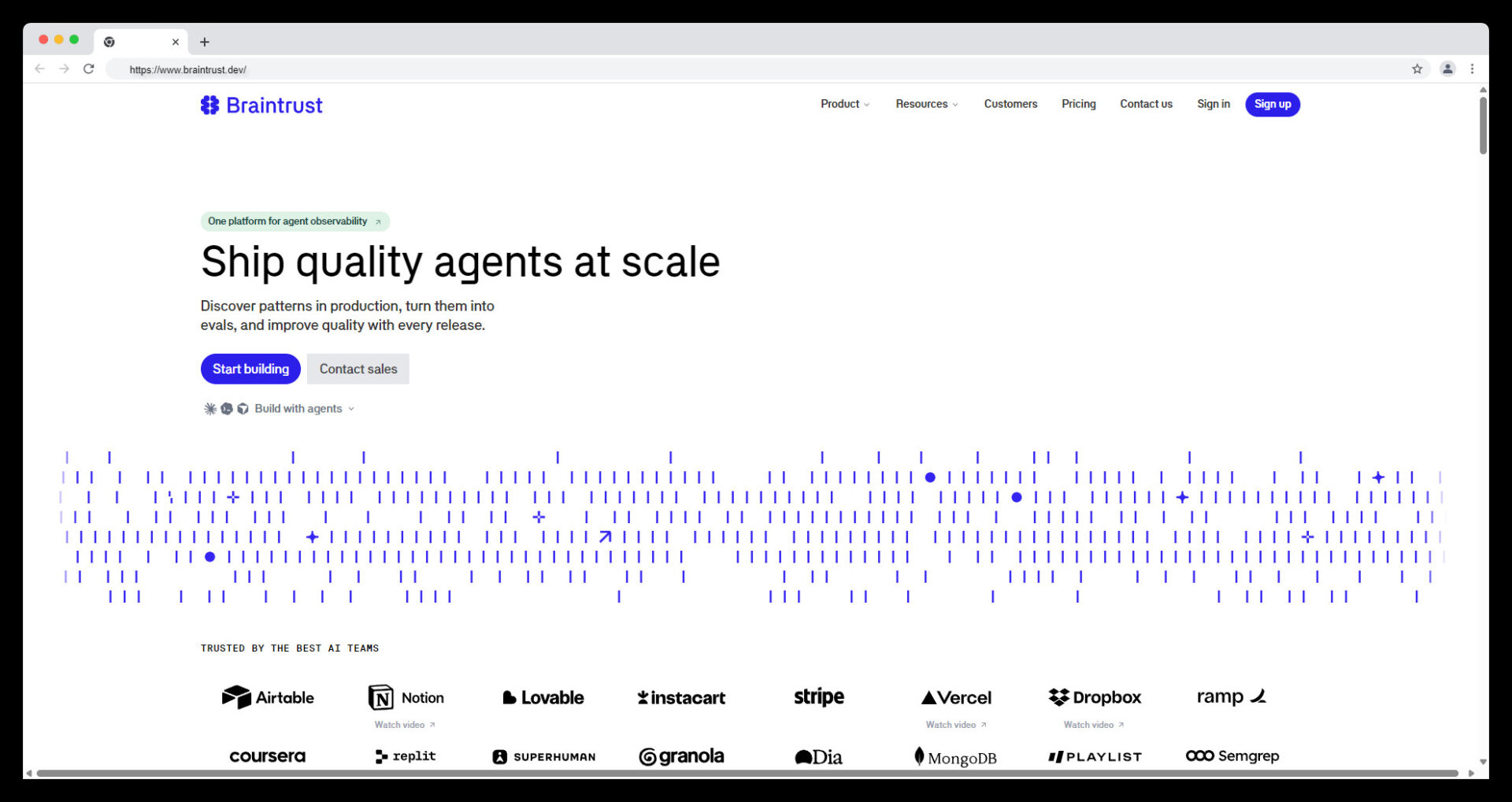
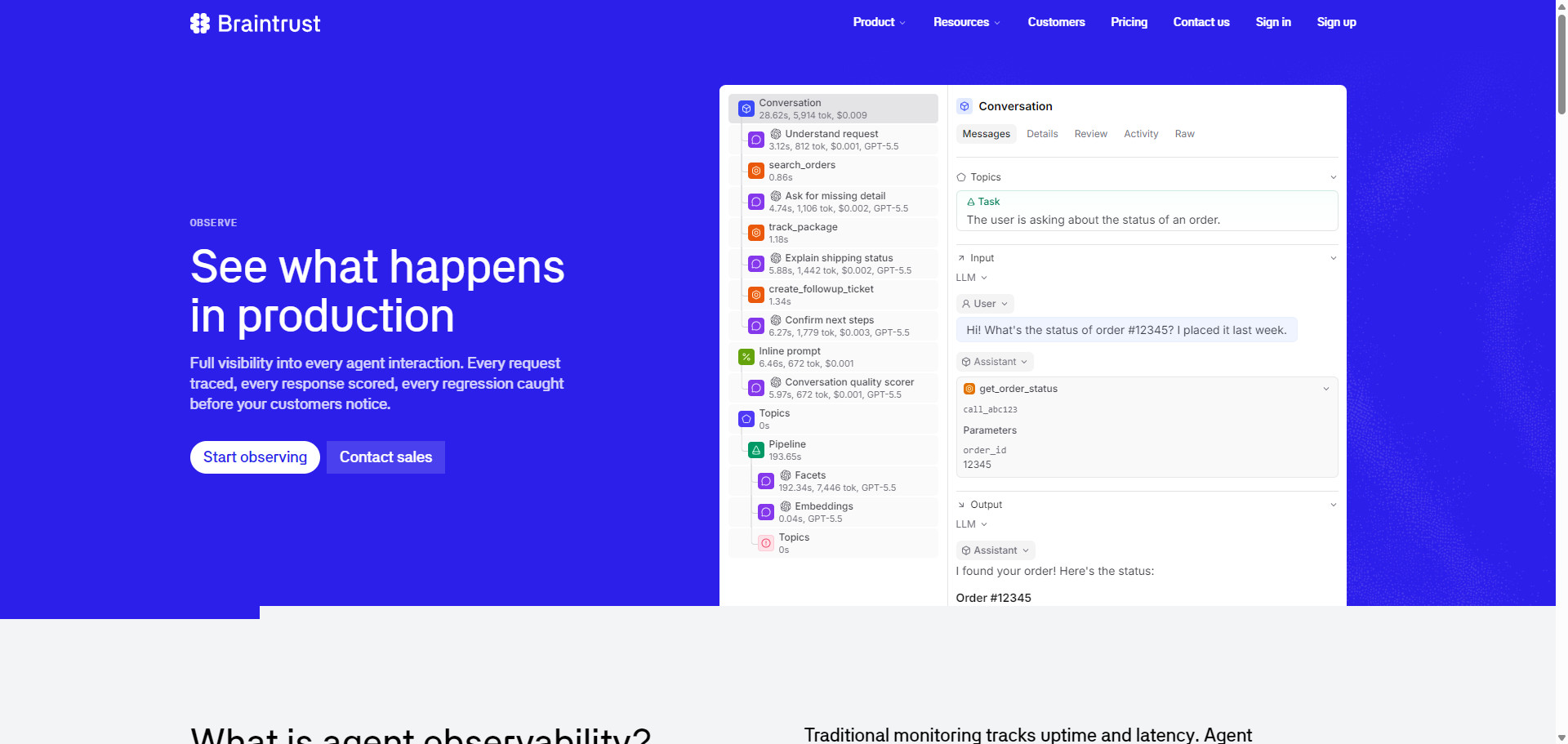
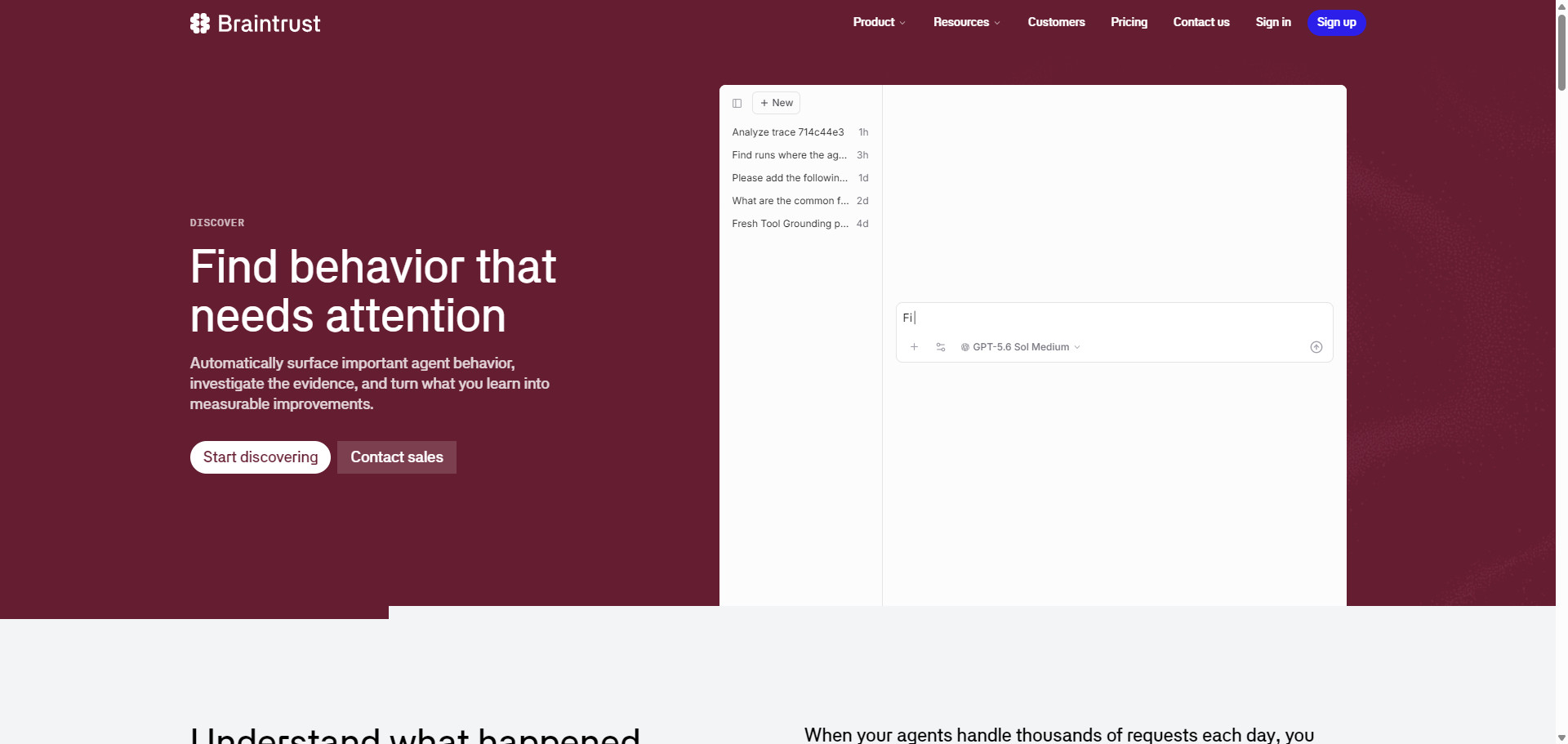





Braintrust is a robust platform for AI application development and evaluation, offering teams the tools needed to continuously test, monitor, and improve AI systems. While it comes with a higher price point and some complexity, it delivers strong value for organizations focused on building reliable, production-ready AI products.
Category: AI Agent Builder / LLM Evaluation Platform
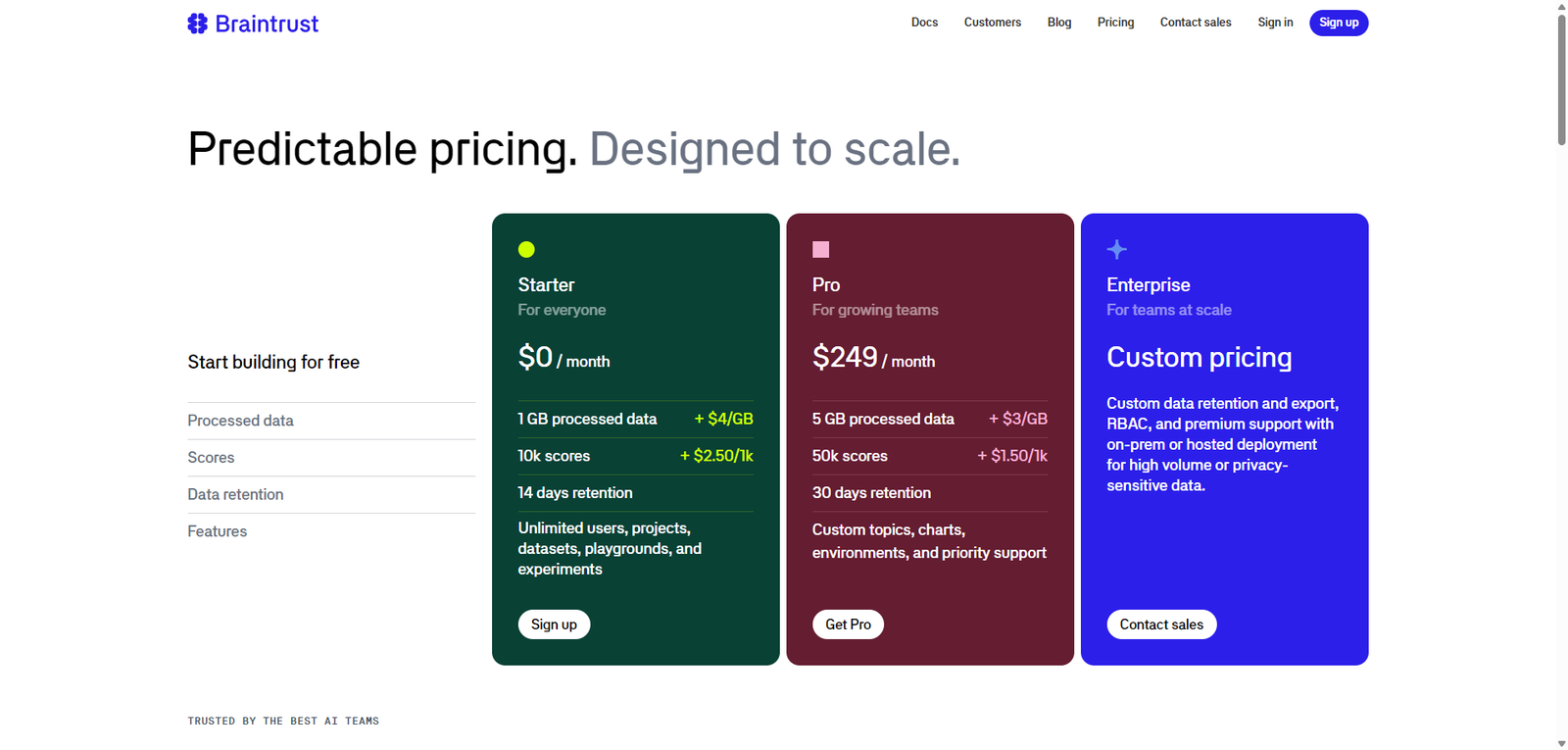
Pricing Snapshot
| Plan | Price | Notes |
|---|---|---|
| Free Tier | Available | Limited usage and features |
| Paid Plan | From $249/month | Advanced features and team usage |
| Enterprise | Custom | Scalable deployments and support |
Pricing Transparency: Medium — entry pricing visible, scaling unclear
Source Type
- Product interface and feature descriptions
- AI evaluation and observability ecosystem comparison
- Developer tooling analysis
Overview
Braintrust is an AI platform designed for building, testing, and evaluating AI applications, with a strong emphasis on continuous evaluation and performance monitoring. It provides an integrated environment where teams can develop AI workflows while maintaining visibility into how models perform over time.
Unlike standalone observability tools, Braintrust combines:
- Application development support
- Prompt testing and evaluation
- Performance tracking and monitoring
This positions it as a full lifecycle platform for AI product development, rather than just a debugging or logging tool.
Key Features
1. End-to-End Evaluation Framework
- Test AI outputs across different scenarios
- Define evaluation metrics and benchmarks
- Compare performance across prompts and models
2. Real-Time Visualization
- Monitor AI system behavior through dashboards
- Visualize outputs, errors, and performance trends
- Identify bottlenecks and inconsistencies
3. Performance Tracking
- Track model accuracy and response quality
- Monitor latency and system efficiency
- Maintain historical performance records
4. Continuous Monitoring
- Evaluate AI systems in production environments
- Detect regressions or unexpected changes
- Ensure consistent output quality over time
5. Custom Functions & Workflow Support
- Extend platform capabilities with custom logic
- Integrate evaluation into existing pipelines
- Support flexible development workflows
Use Cases
AI Application Development
- Build and refine AI-powered products
- Test prompts and workflows before deployment
- Iterate quickly with feedback loops
Prompt Engineering & Testing
- Compare prompt variations
- Optimize outputs for accuracy and relevance
- Standardize prompt evaluation processes
Production Monitoring
- Track live AI system performance
- Detect issues early
- Maintain reliability at scale
Team Collaboration
- Share evaluation results across teams
- Standardize testing frameworks
- Improve coordination between developers and stakeholders
Pros and Cons
Pros
- Combines development and evaluation in one platform
- Strong focus on continuous testing and monitoring
- Useful for both experimentation and production
- Supports team collaboration workflows
- Provides structured evaluation methodologies
Cons
- Pricing may be high for small teams
- Requires setup and integration effort
- Learning curve for non-technical users
- Closed-source model limits flexibility
- Not focused on no-code automation use cases
Feature Comparison
| Feature | Braintrust | Phoenix | LangSmith |
|---|---|---|---|
| Open Source | No | Yes | No |
| End-to-End Evaluation | Yes | Yes | Yes |
| Real-Time Monitoring | Yes | Yes | Yes |
| Prompt Testing | Yes | Limited | Yes |
| Ease of Use | Medium | Medium | High |
Alternatives
| Tool | Best For | Key Difference |
|---|---|---|
| Phoenix | Open-source observability | More flexible, self-hosted |
| LangSmith | LLM debugging | Strong LangChain integration |
| Weights & Biases | ML monitoring | Broader ML focus |
| Helicone | API monitoring | Lightweight observability |
Verdict
Braintrust is a comprehensive AI development and evaluation platform that excels in helping teams build, test, and monitor AI applications throughout their lifecycle.
Its strengths include:
- Integrated evaluation workflows
- Real-time monitoring and visualization
- Strong support for prompt testing and iteration
However, considerations include:
- Pricing that may not suit smaller teams
- Closed ecosystem compared to open-source alternatives
- Setup complexity for new users
Best suited for:
- Teams building production AI applications
- Organizations prioritizing evaluation and reliability
- Developers working on prompt optimization
Not ideal for:
- Individual users or hobbyists
- No-code automation seekers
- Teams needing open-source flexibility
Rating
| Category | Score |
|---|---|
| Features | 4.5 / 5 |
| Ease of Use | 3.8 / 5 |
| Evaluation Capabilities | 4.7 / 5 |
| Pricing Value | 3.6 / 5 |
| Overall | 4.2 / 5 |
FAQ
What is Braintrust used for?
Braintrust is used to build, test, and evaluate AI applications, with a focus on continuous monitoring and performance tracking.
Is Braintrust free?
It offers a free tier, with paid plans starting at approximately $249/month.
How does Braintrust differ from Phoenix?
Braintrust is a closed-source, full lifecycle platform, while Phoenix is open-source and focused more on observability.
Does Braintrust support production environments?
Yes, it includes tools for monitoring and evaluating AI systems in production.
Is Braintrust suitable for beginners?
It is more suitable for developers and teams with some technical experience.