Discover the newest AI agents, tools, and automation trends shaping the future of work. From powerful agent builders to cutting-edge workflow automation, we break down what matters so you can stay ahead.
Get expert insights, tool comparisons, and curated recommendations—all in one place.
AI visual field testing tools enable digital vision assessment and remote eye screening, offering a more accessible and scalable alternative to traditional diagnostic methods.
AI visual field testing tools are reshaping how vision assessment is performed, making it more accessible and scalable. While not yet a full replacement for traditional clinical devices, they offer significant potential in remote care and early detection.
Visual Field Test AI Review (2026): Digital Eye Testing & Vision Assessment Technology
Category: Health Tech / AI Diagnostics
Pricing Snapshot
Plan
Price
Notes
Clinical Software
Custom
Typically licensed to clinics or providers
Consumer Apps
Varies
Some tools offer app-based testing
Enterprise
Custom
Integration with healthcare systems
Pricing Transparency: Low — varies widely by provider and deployment model
Source Type
Health tech and ophthalmology software analysis
Digital diagnostics and AI healthcare trends
Comparison with traditional visual field testing methods
Overview
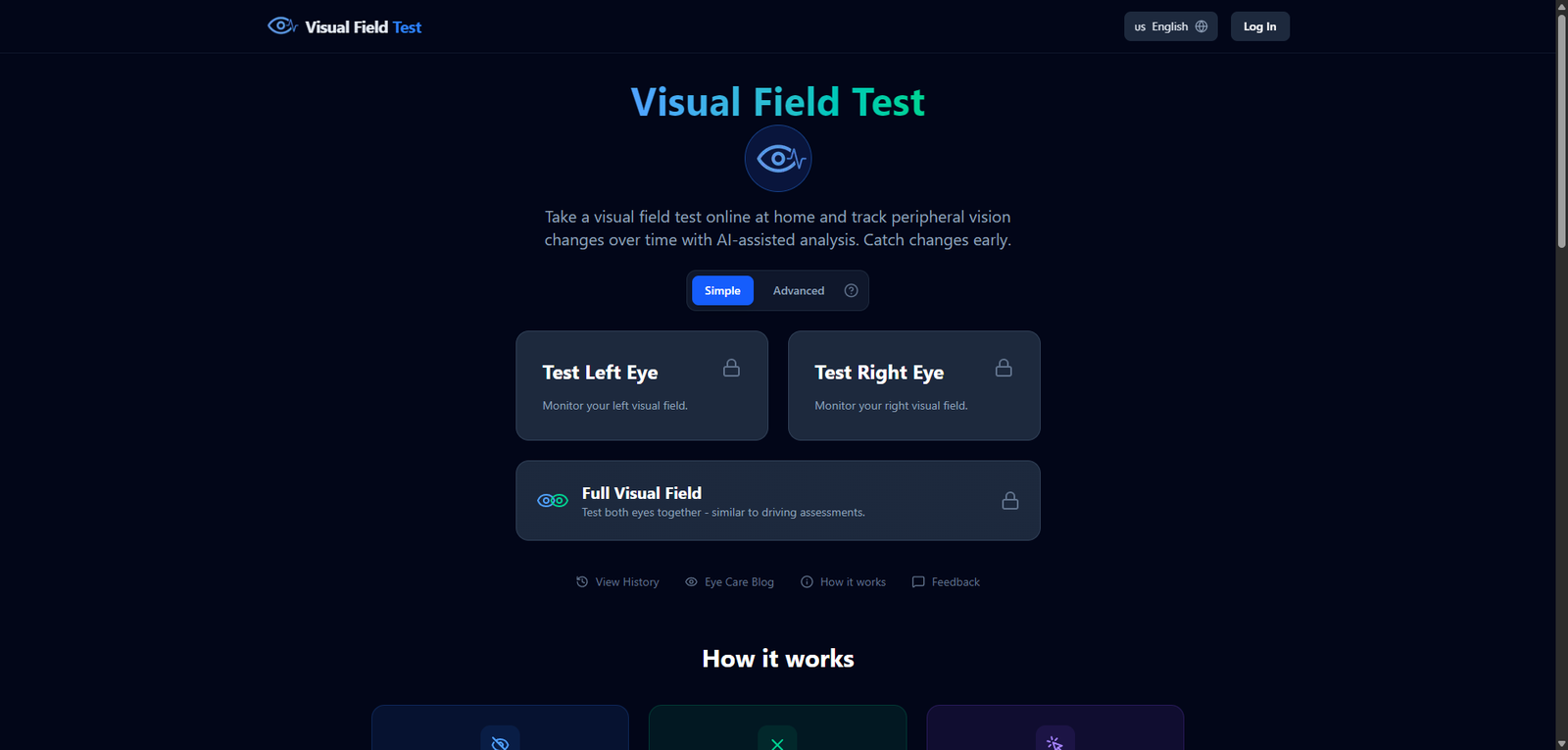
Visual Field Test AI refers to a new generation of digital tools and software that use artificial intelligence to assess a patient’s field of vision, often as an alternative or complement to traditional perimetry tests.
These systems are designed to:
Detect blind spots and vision loss
Assist in diagnosing conditions like glaucoma
Enable remote or portable eye testing
Improve accessibility to eye care
AI-powered visual field testing is emerging as a more flexible and scalable solution compared to traditional clinical equipment.
Key Features
1. AI-Based Vision Assessment
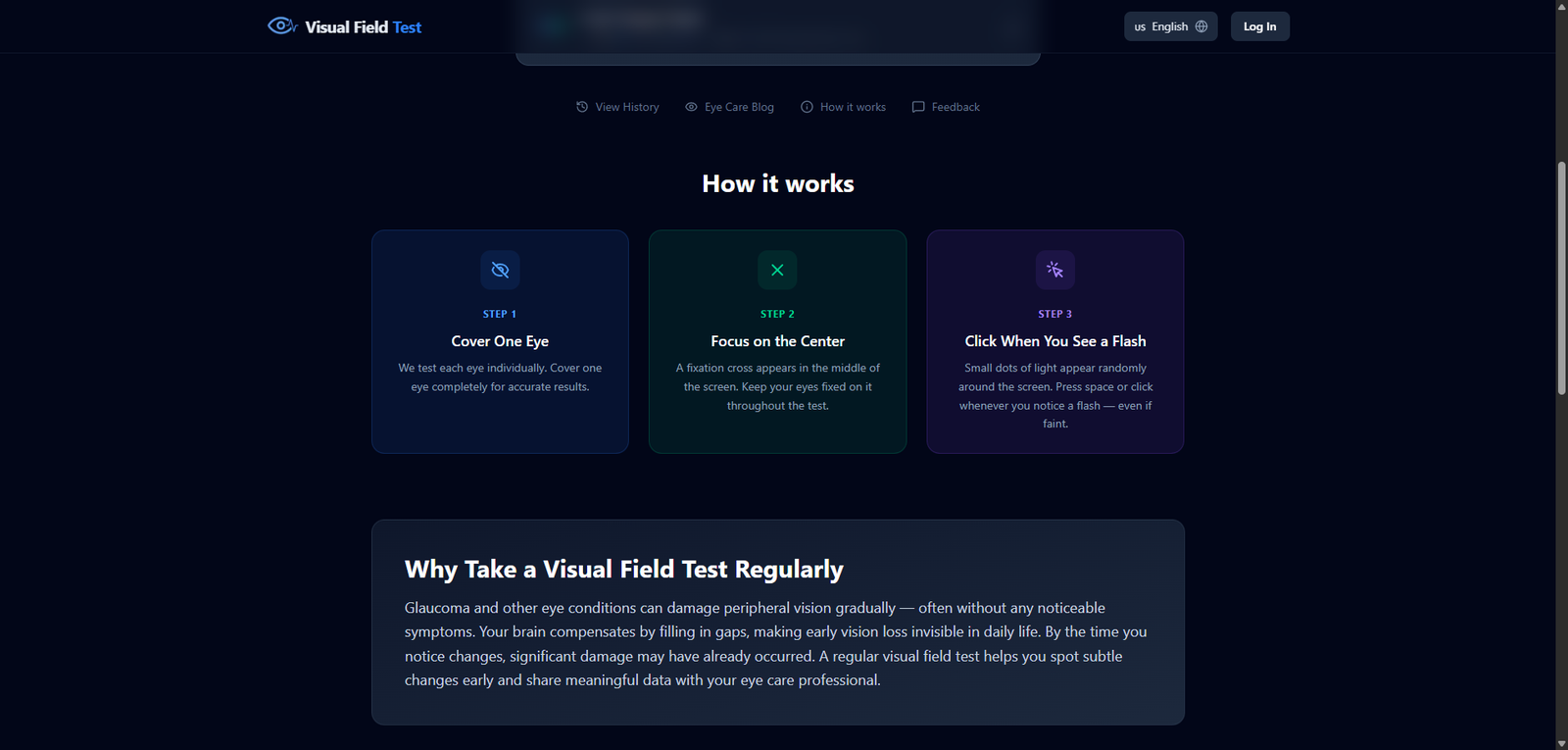
Analyze patient responses to visual stimuli
Detect abnormalities in peripheral vision
Support early diagnosis of eye conditions
2. Digital & Remote Testing
Conduct tests via apps or web platforms
Enable at-home or remote screening
Reduce reliance on specialized equipment
3. Automated Reporting
Generate visual maps of the field of vision
Provide diagnostic insights
Assist clinicians in decision-making
4. Progress Tracking
Monitor changes in vision over time
Track disease progression
Support long-term patient care
5. Accessibility & Portability
Use on standard devices (tablet, laptop)
Increase access in underserved areas
Lower cost compared to traditional machines
6. Clinical Integration (Advanced)
Integrate with electronic health records (EHR)
Support clinical workflows
Enable data sharing between providers
Use Cases
Ophthalmology Clinics
Assist in diagnosing glaucoma and retinal conditions
Complement traditional visual field tests
Improve efficiency in patient assessments
Remote Eye Screening
Conduct vision tests outside clinics
Expand access to care
Support telemedicine workflows
Preventive Healthcare
Detect early signs of vision loss
Encourage routine screening
Improve patient outcomes
Research & Clinical Trials
Collect vision data at scale
Analyze patterns using AI
Support medical research
Pros and Cons
Pros
Expands access to vision testing and diagnostics
Enables remote and portable testing
Reduces cost compared to traditional equipment
Supports early detection of eye conditions
Improves workflow efficiency for clinicians
Cons
Not a full replacement for clinical-grade equipment
Accuracy may vary depending on device and environment
Requires validation and regulatory approval
Limited awareness and adoption
Dependence on user compliance during testing
Feature Comparison
Feature
AI Visual Field Tools
Traditional Perimetry
Portability
High
Low
Cost
Lower
High
Accuracy
Medium-High
Very High
Accessibility
High
Limited
Clinical Validation
Emerging
Established
Alternatives
Tool / Method
Best For
Key Difference
Humphrey Field Analyzer
Clinical testing
Gold standard equipment
Octopus Perimetry
Advanced diagnostics
High precision
Mobile Vision Apps
Consumer screening
Less accurate but accessible
Telemedicine Platforms
Remote care
Broader health integration
Verdict
AI-powered visual field testing represents a promising advancement in digital health, offering more accessible and scalable ways to assess vision and detect eye conditions early.
Its strengths include:
Increased accessibility and portability
Lower cost and ease of use
Potential for remote healthcare delivery
However, limitations include:
Not yet a full replacement for clinical devices
Variability in accuracy
Need for regulatory validation
Best suited for:
Clinics seeking supplementary tools
Telemedicine providers
Preventive health screening programs
Not ideal for:
Critical clinical diagnostics without validation
Situations requiring gold-standard precision
Users without proper testing conditions
Rating
Category
Score
Innovation
4.7 / 5
Accessibility
4.6 / 5
Accuracy
4.1 / 5
Clinical Readiness
3.8 / 5
Overall
4.3 / 5
FAQ
What is an AI visual field test?
It is a digital tool that uses AI to assess a person’s field of vision and detect abnormalities.
Can AI replace traditional eye tests?
Not fully—it complements but does not replace clinical-grade equipment.
Is it accurate?
Accuracy is improving but varies depending on implementation and environment.
Can it be used at home?
Yes, many tools support remote or app-based testing.
Who should use it?
Clinics, telehealth providers, and individuals monitoring eye health.