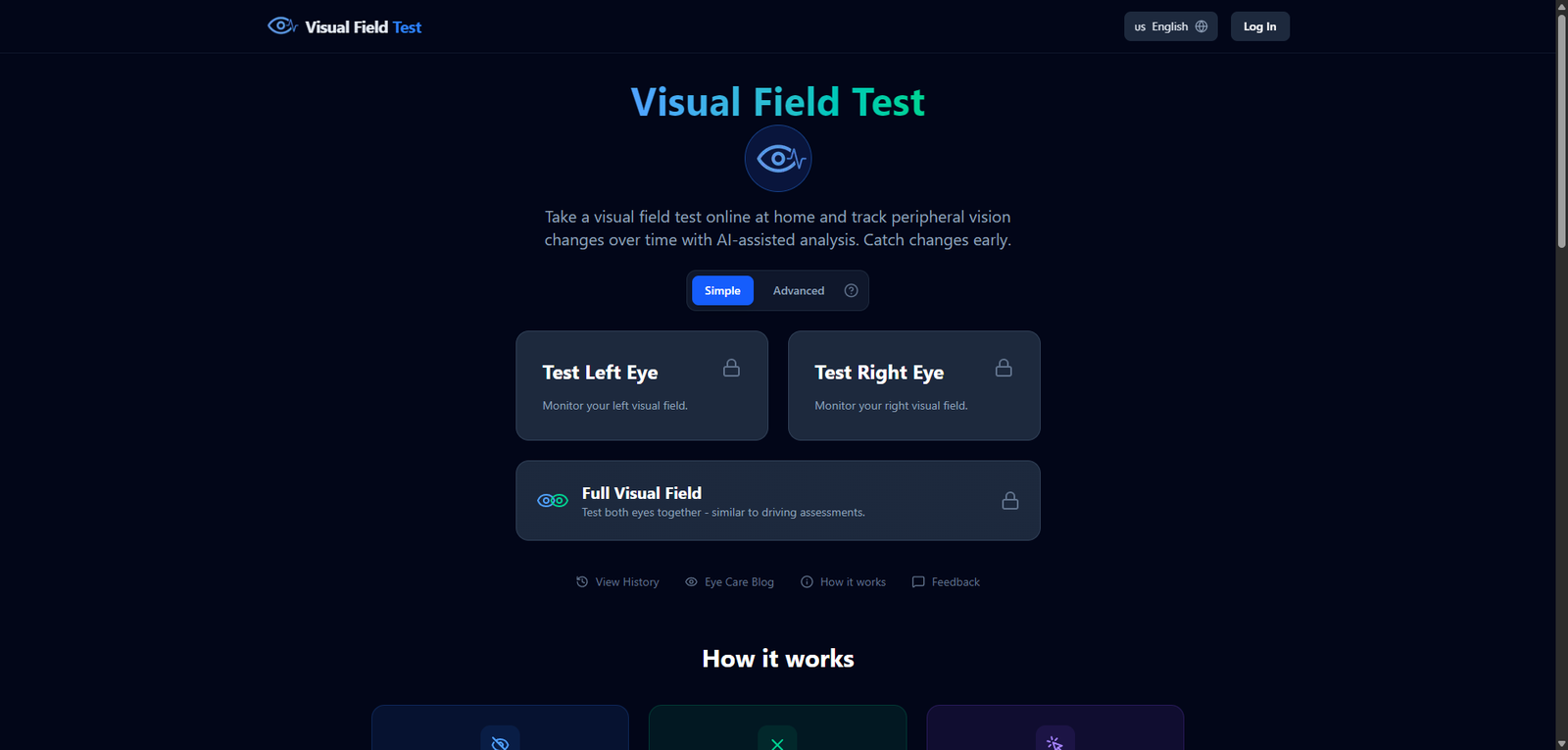
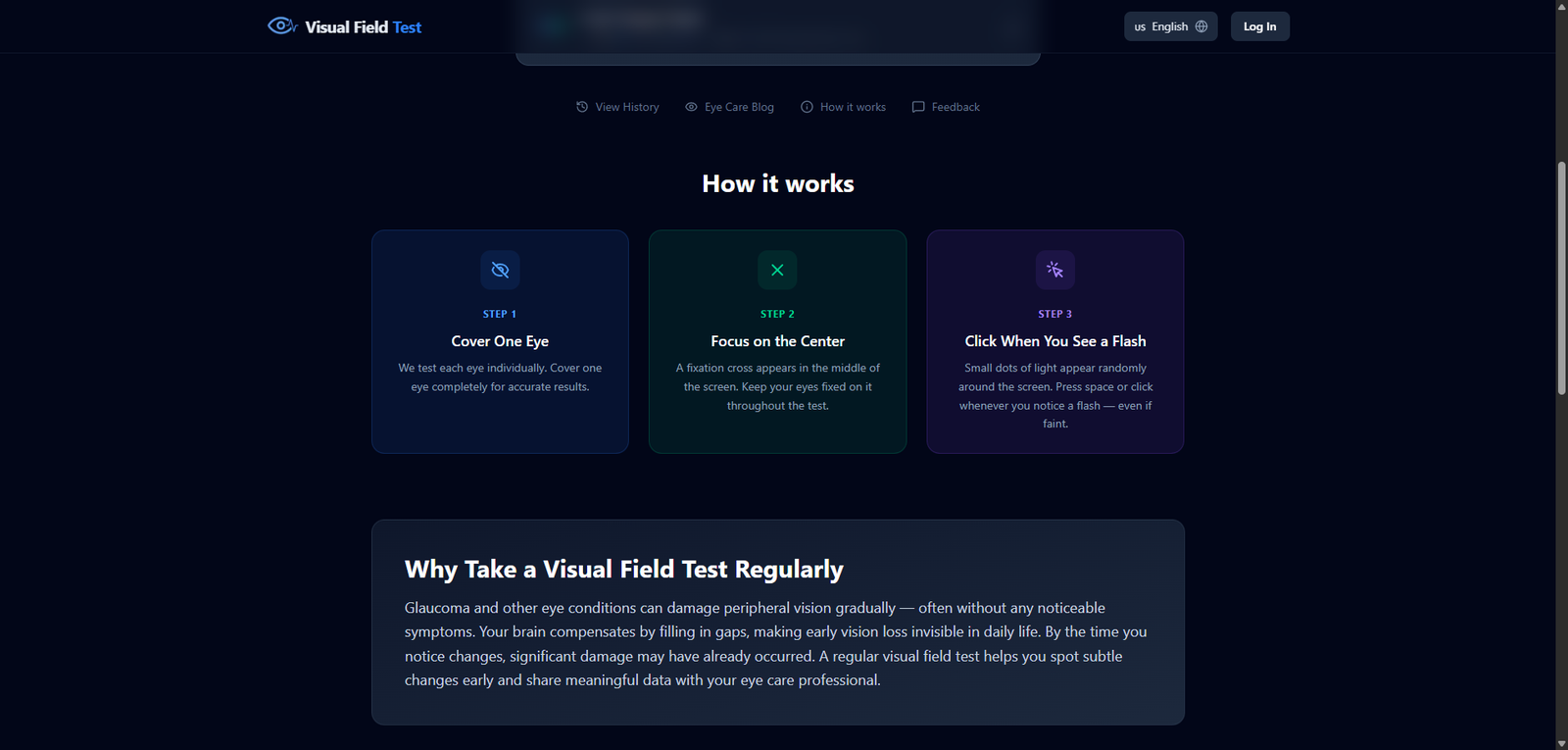


AI visual field testing tools are reshaping how vision assessment is performed, making it more accessible and scalable. While not yet a full replacement for traditional clinical devices, they offer significant potential in remote care and early detection.
Visual Field Test AI Review (2026): Digital Eye Testing & Vision Assessment Technology
Category: Health Tech / AI Diagnostics
Pricing Snapshot
| Plan | Price | Notes |
|---|---|---|
| Clinical Software | Custom | Typically licensed to clinics or providers |
| Consumer Apps | Varies | Some tools offer app-based testing |
| Enterprise | Custom | Integration with healthcare systems |
Pricing Transparency: Low — varies widely by provider and deployment model
Source Type
- Health tech and ophthalmology software analysis
- Digital diagnostics and AI healthcare trends
- Comparison with traditional visual field testing methods
Overview
Visual Field Test AI refers to a new generation of digital tools and software that use artificial intelligence to assess a patient’s field of vision, often as an alternative or complement to traditional perimetry tests.
These systems are designed to:
- Detect blind spots and vision loss
- Assist in diagnosing conditions like glaucoma
- Enable remote or portable eye testing
- Improve accessibility to eye care
AI-powered visual field testing is emerging as a more flexible and scalable solution compared to traditional clinical equipment.
Key Features
1. AI-Based Vision Assessment
- Analyze patient responses to visual stimuli
- Detect abnormalities in peripheral vision
- Support early diagnosis of eye conditions
2. Digital & Remote Testing
- Conduct tests via apps or web platforms
- Enable at-home or remote screening
- Reduce reliance on specialized equipment
3. Automated Reporting
- Generate visual maps of the field of vision
- Provide diagnostic insights
- Assist clinicians in decision-making
4. Progress Tracking
- Monitor changes in vision over time
- Track disease progression
- Support long-term patient care
5. Accessibility & Portability
- Use on standard devices (tablet, laptop)
- Increase access in underserved areas
- Lower cost compared to traditional machines
6. Clinical Integration (Advanced)
- Integrate with electronic health records (EHR)
- Support clinical workflows
- Enable data sharing between providers
Use Cases
Ophthalmology Clinics
- Assist in diagnosing glaucoma and retinal conditions
- Complement traditional visual field tests
- Improve efficiency in patient assessments
Remote Eye Screening
- Conduct vision tests outside clinics
- Expand access to care
- Support telemedicine workflows
Preventive Healthcare
- Detect early signs of vision loss
- Encourage routine screening
- Improve patient outcomes
Research & Clinical Trials
- Collect vision data at scale
- Analyze patterns using AI
- Support medical research
Pros and Cons
Pros
- Expands access to vision testing and diagnostics
- Enables remote and portable testing
- Reduces cost compared to traditional equipment
- Supports early detection of eye conditions
- Improves workflow efficiency for clinicians
Cons
- Not a full replacement for clinical-grade equipment
- Accuracy may vary depending on device and environment
- Requires validation and regulatory approval
- Limited awareness and adoption
- Dependence on user compliance during testing
Feature Comparison
| Feature | AI Visual Field Tools | Traditional Perimetry |
|---|---|---|
| Portability | High | Low |
| Cost | Lower | High |
| Accuracy | Medium-High | Very High |
| Accessibility | High | Limited |
| Clinical Validation | Emerging | Established |
Alternatives
| Tool / Method | Best For | Key Difference |
|---|---|---|
| Humphrey Field Analyzer | Clinical testing | Gold standard equipment |
| Octopus Perimetry | Advanced diagnostics | High precision |
| Mobile Vision Apps | Consumer screening | Less accurate but accessible |
| Telemedicine Platforms | Remote care | Broader health integration |
Verdict
AI-powered visual field testing represents a promising advancement in digital health, offering more accessible and scalable ways to assess vision and detect eye conditions early.
Its strengths include:
- Increased accessibility and portability
- Lower cost and ease of use
- Potential for remote healthcare delivery
However, limitations include:
- Not yet a full replacement for clinical devices
- Variability in accuracy
- Need for regulatory validation
Best suited for:
- Clinics seeking supplementary tools
- Telemedicine providers
- Preventive health screening programs
Not ideal for:
- Critical clinical diagnostics without validation
- Situations requiring gold-standard precision
- Users without proper testing conditions
Rating
| Category | Score |
|---|---|
| Innovation | 4.7 / 5 |
| Accessibility | 4.6 / 5 |
| Accuracy | 4.1 / 5 |
| Clinical Readiness | 3.8 / 5 |
| Overall | 4.3 / 5 |
FAQ
What is an AI visual field test?
It is a digital tool that uses AI to assess a person’s field of vision and detect abnormalities.
Can AI replace traditional eye tests?
Not fully—it complements but does not replace clinical-grade equipment.
Is it accurate?
Accuracy is improving but varies depending on implementation and environment.
Can it be used at home?
Yes, many tools support remote or app-based testing.
Who should use it?
Clinics, telehealth providers, and individuals monitoring eye health.