



Discover the newest AI agents, tools, and automation trends shaping the future of work. From powerful agent builders to cutting-edge workflow automation, we break down what matters so you can stay ahead.
Get expert insights, tool comparisons, and curated recommendations—all in one place.
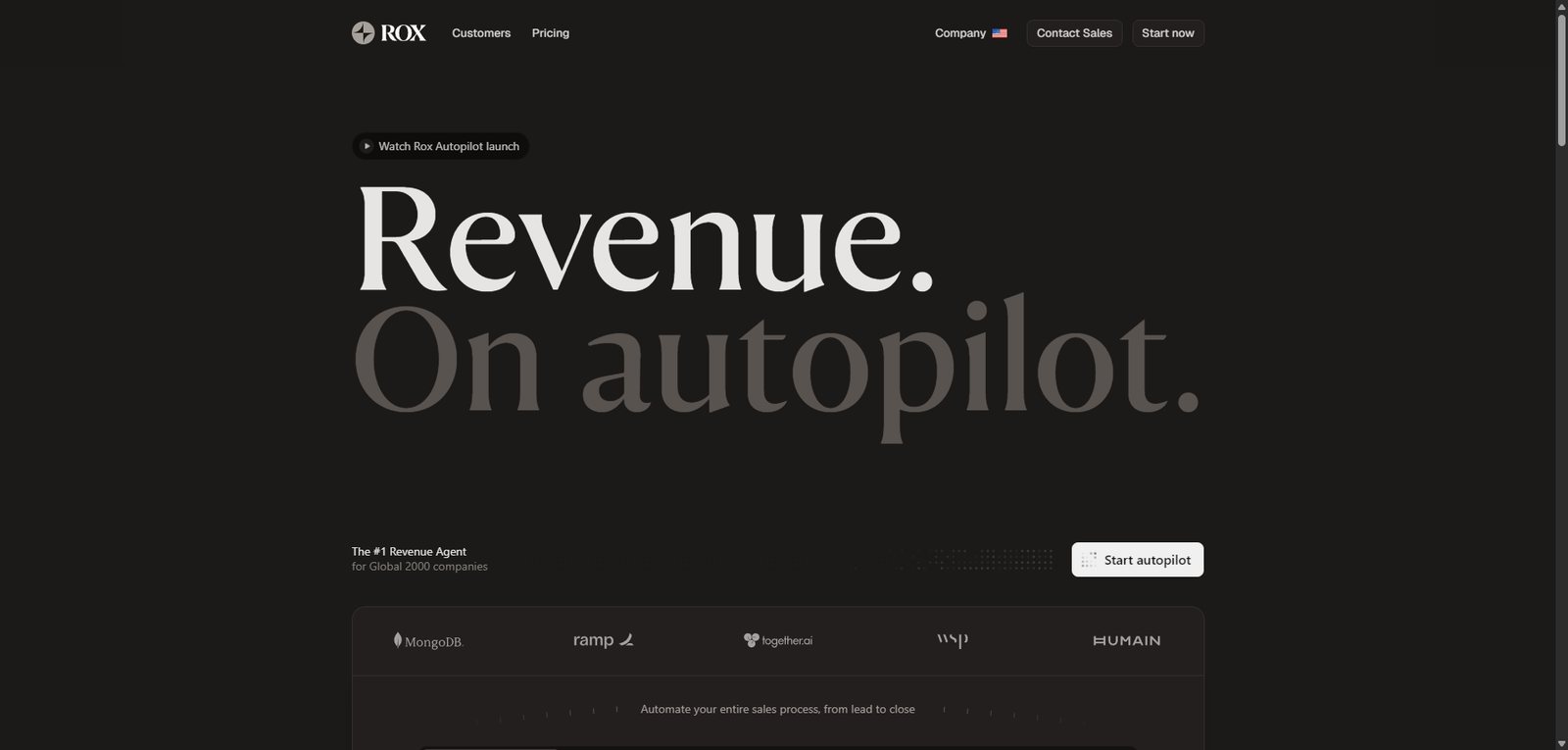
Rox is an AI agent builder that enables users to create and deploy autonomous agents for workflow automation, combining no-code tools with scalable, intelligent systems.
Rox is a flexible AI agent builder that enables users to create autonomous, context-aware workflows through a no-code interface. While still evolving, it offers a strong foundation for teams looking to adopt agent-based automation at scale.
Rox Review (2026): AI Agent Builder for Scalable Workflow Automation
Category: AI Agent Builder / Workflow Automation
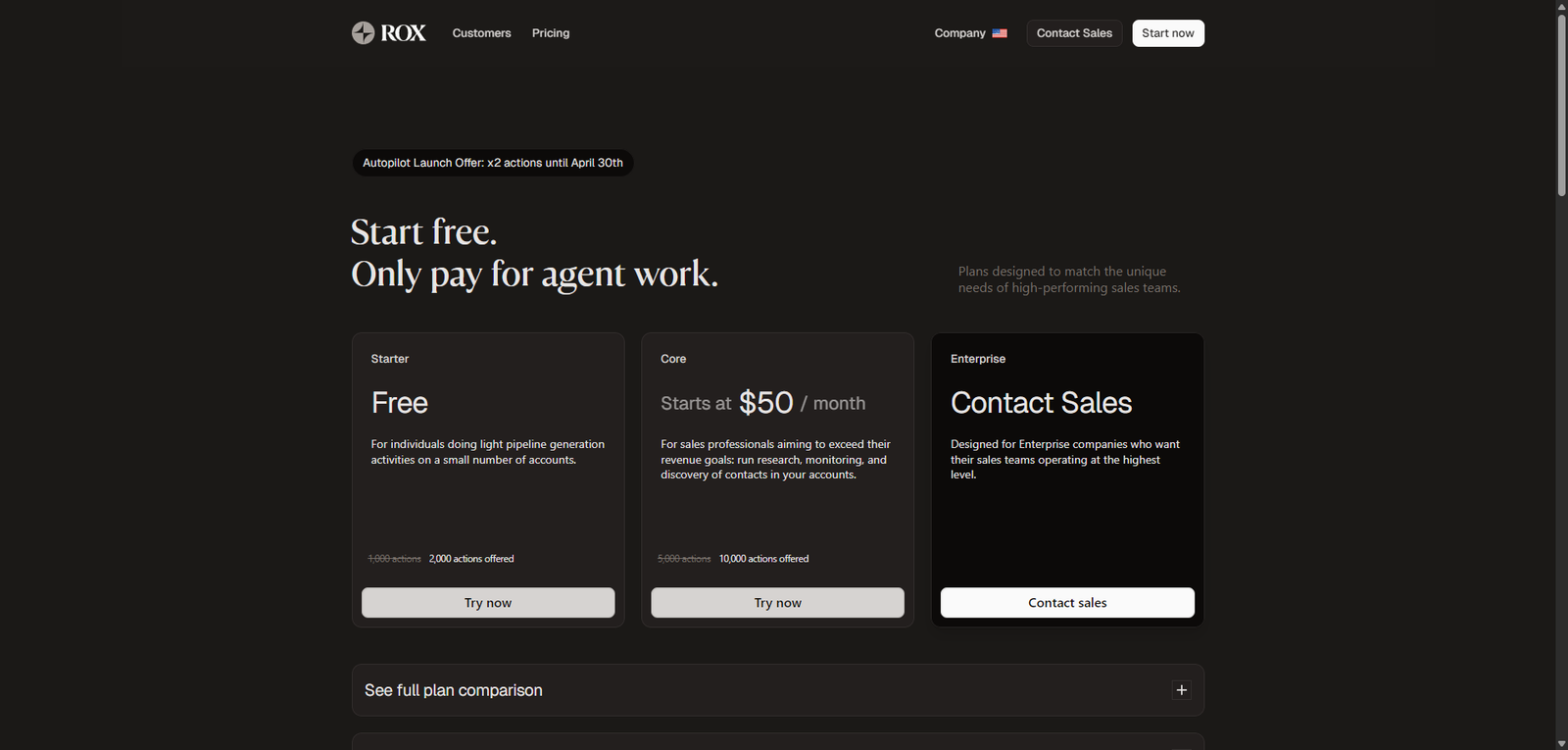
Pricing Snapshot
Plan
Price
Notes
Free Tier
Not clearly specified
সম্ভাব্য trial or limited usage
Paid Plans
Undisclosed
Likely subscription-based
Enterprise
Custom
Advanced automation and scaling
Pricing Transparency: Low — limited publicly available pricing details
Source Type
Product positioning and AI agent platform analysis
Workflow automation and agent orchestration trends
Comparison with AI agent builders and automation tools
Overview
Rox is an AI agent builder platform designed to create, deploy, and manage autonomous agents for workflow automation and business operations. It focuses on enabling users to move beyond traditional automation into agent-based systems that can adapt, reason, and execute tasks dynamically.
Unlike static automation tools, Rox emphasizes:
Autonomous agents instead of fixed workflows
Context-aware decision-making
Scalable automation across systems and teams
The platform positions itself as a bridge between no-code automation and intelligent AI orchestration, making it accessible while still supporting advanced use cases.
Key Features
1. AI Agent Builder
Create custom agents for different tasks and roles
Define goals, logic, and behavior
Support multi-agent collaboration
2. Workflow Automation Engine
Automate multi-step processes
Combine logic, triggers, and actions
Enable end-to-end execution
3. No-Code / Low-Code Interface
Visual tools for building agents
Accessible to non-developers
Faster deployment of automation
4. Integration Ecosystem
Connect with APIs and external tools
Enable cross-platform workflows
Extend automation across systems
5. Context-Aware Decision Making
Agents adapt based on inputs and data
Handle dynamic scenarios
Improve accuracy and relevance over time
6. Scalable Deployment
Deploy multiple agents across workflows
Manage large automation systems
Suitable for business and enterprise environments
Use Cases
Business Process Automation
Automate internal workflows
Reduce manual operations
Improve efficiency across teams
AI Agent Systems
Build and deploy intelligent agents
Enable autonomous task execution
Experiment with agent-based architectures
Customer Operations
Automate support and service workflows
Manage interactions and processes
Improve response efficiency
Data & System Orchestration
Connect tools and data sources
Automate data-driven workflows
Streamline operations
Pros and Cons
Pros
Strong focus on agent-based automation
No-code accessibility with flexible workflows
Supports complex, multi-step processes
Scalable for growing automation needs
Enables context-aware, adaptive systems
Cons
Pricing not transparent
Limited public documentation
Early-stage ecosystem
May require learning curve for advanced use cases
Integration depth not fully detailed
Feature Comparison
Feature
Rox
LangChain
n8n
AI Agent Builder
Yes
Yes
Limited
No-Code Interface
Yes
No
Yes
Workflow Automation
Yes
Yes
Yes
Ease of Use
High
Medium
Medium
Customization
Medium
High
High
Alternatives
Tool
Best For
Key Difference
LangChain
Developer frameworks
Code-first approach
n8n
Workflow automation
Less AI-native agents
CrewAI
Role-based agents
Simpler abstractions
AutoGen
Multi-agent systems
Research-focused
Verdict
Rox is a modern AI agent builder platform that brings intelligent automation and agent-based workflows into a more accessible, no-code environment. It is particularly valuable for teams looking to experiment with or deploy AI agents without heavy engineering overhead.
Its strengths include:
Agent-first automation approach
Ease of use for non-technical users
Scalability for business workflows
However, limitations include:
Early-stage maturity
Limited transparency and documentation
Potential need for technical input in complex scenarios
Best suited for:
Businesses exploring AI automation
Teams building agent-based workflows
Users seeking no-code AI tools
Not ideal for:
Developers needing full low-level control
Enterprises requiring mature ecosystems
Simple, rule-based automation use cases
Rating
Category
Score
Features
4.3 / 5
Ease of Use
4.4 / 5
Flexibility
4.2 / 5
Pricing Transparency
2.8 / 5
Overall
4.2 / 5
FAQ
What is Rox used for?
Rox is used to build and deploy AI agents that automate workflows and business processes.
Is Rox no-code?
Yes, it supports no-code and low-code agent development.
Does Rox support integrations?
Yes, it connects with APIs and external tools.
Who should use Rox?
Businesses, teams, and users building AI-driven automation systems.
Is Rox beginner-friendly?
Yes, though advanced use cases may require some technical understanding.