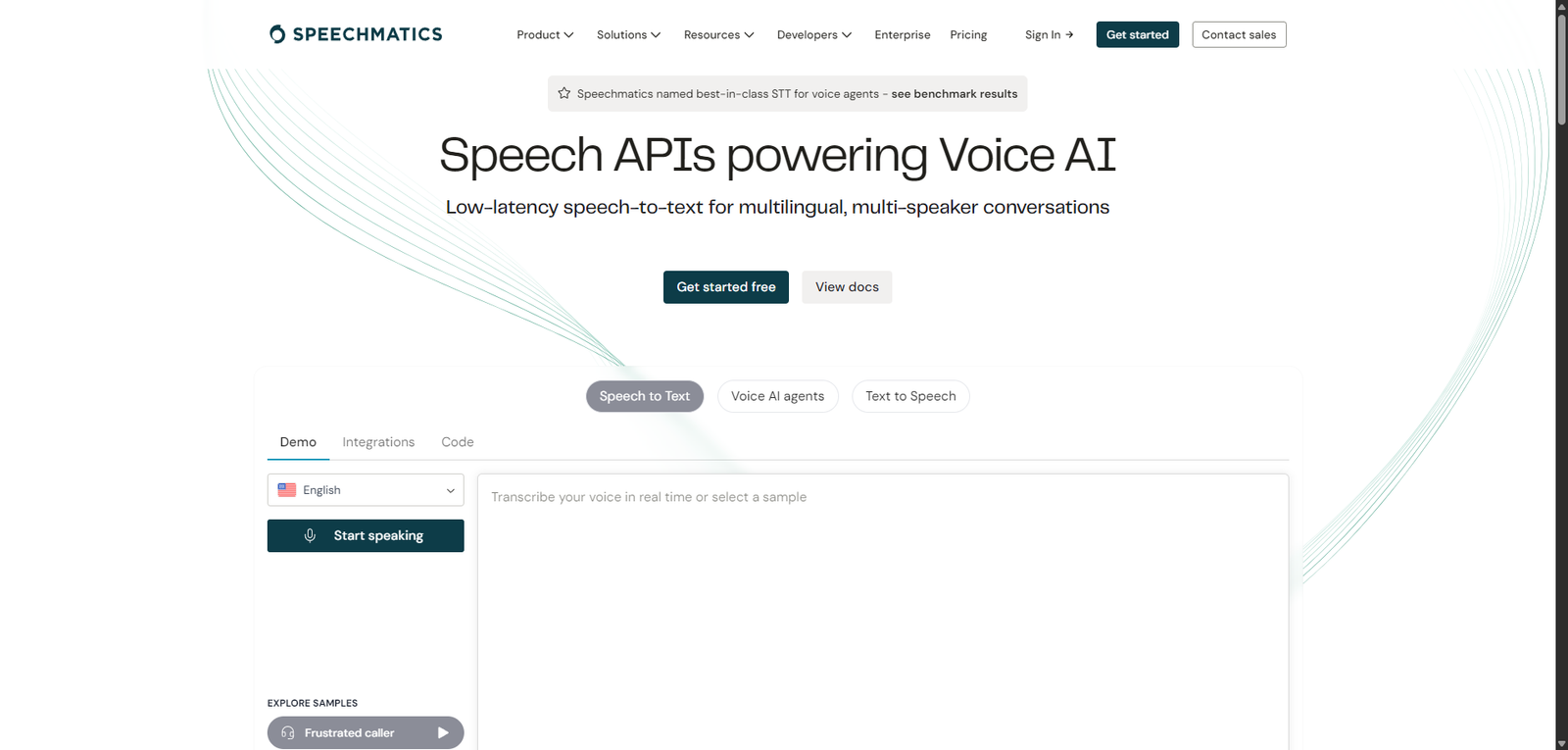
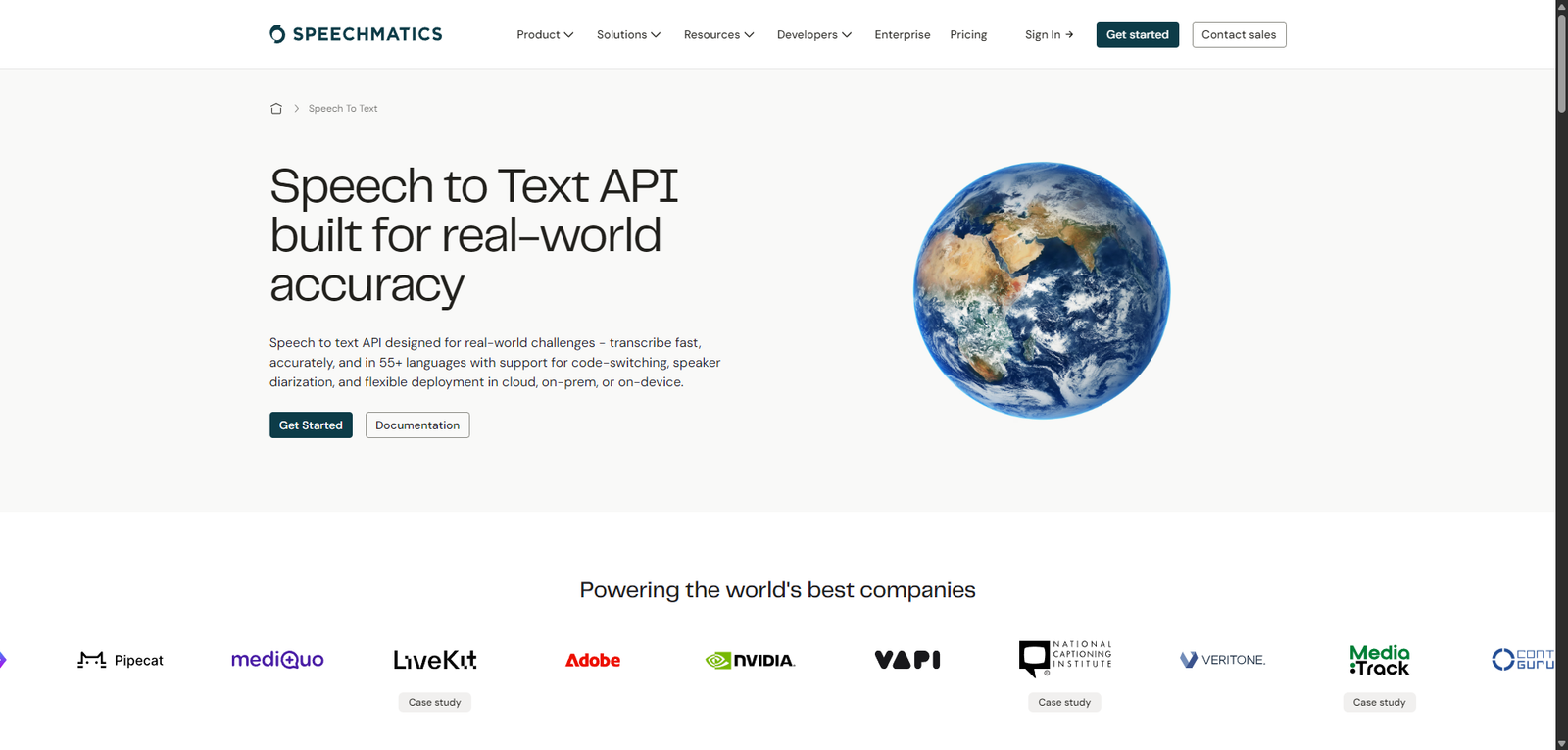


Speechmatics is a high-performance voice AI platform that delivers accurate, real-time transcription across multiple languages. It stands out for its enterprise readiness and global scalability, making it a strong choice for organizations building voice-driven applications and services.
Category: AI Agent Builder / Voice AI / Speech Recognition API
Pricing Snapshot
| Plan | Price | Notes |
|---|---|---|
| Free Tier | Available | Limited usage for testing |
| Paid Plans | From ~$0.30/month (usage-based) | Scales with audio processing volume |
| Enterprise | Custom | High-volume and SLA-based pricing |
Pricing Transparency: Medium — entry pricing visible, usage scaling varies
Source Type
- Product feature overview and API capabilities
- Voice AI and ASR (automatic speech recognition) ecosystem comparison
- Developer-focused platform analysis
Overview
Speechmatics is a voice AI platform offering APIs for speech recognition, transcription, and voice interaction, designed for real-time and batch audio processing at scale. It focuses on delivering high-accuracy transcription across multiple languages and accents, making it suitable for global and enterprise use cases.
Unlike general AI agent builders, Speechmatics operates as a specialized voice infrastructure layer, enabling developers to:
- Convert speech to text in real time
- Build voice-enabled applications
- Process multilingual audio data
- Integrate transcription into workflows and systems
Its strength lies in combining low latency, high accuracy, and broad language support, positioning it as a strong alternative to major ASR providers.
Key Features
1. Real-Time Transcription
- Converts speech to text instantly
- Supports live applications such as meetings, calls, and broadcasts
- Low latency (sub-second response times)
2. Multi-Language Support
- Supports 50+ languages
- Handles diverse accents and dialects
- Suitable for global deployments
3. Speaker Diarization
- Identifies and separates different speakers
- Useful for meetings, interviews, and call analysis
- Improves transcript clarity
4. Advanced Punctuation & Formatting
- Adds punctuation automatically
- Improves readability of transcripts
- Reduces need for manual editing
5. Custom Dictionary & Vocabulary
- Add domain-specific terms
- Improve accuracy for niche industries
- Adapt to business-specific language
6. Audio Event Detection
- Detects non-speech audio events
- Enhances context awareness
- Useful for media and analytics applications
Use Cases
Customer Support & Call Centers
- Transcribe customer calls in real time
- Analyze conversations for insights
- Improve service quality and compliance
Media & Broadcasting
- Generate live captions
- Transcribe interviews and shows
- Enable searchable content archives
Healthcare Documentation
- Convert voice notes into structured records
- Improve efficiency for clinicians
- Support multilingual patient interactions
Voice-Enabled Applications
- Build voice assistants and interfaces
- Enable speech-based commands
- Integrate voice into apps and platforms
Pros and Cons
Pros
- High accuracy across languages and accents
- Real-time transcription with low latency
- Strong enterprise and global use case support
- Custom vocabulary for domain-specific needs
- Scalable API for large workloads
Cons
- Pricing scales with usage (can become costly)
- Requires developer integration
- Closed-source platform
- Limited focus on broader AI agent workflows
- Competition from major cloud providers
Feature Comparison
| Feature | Speechmatics | Google Speech-to-Text | AssemblyAI |
|---|---|---|---|
| Real-Time Transcription | Yes | Yes | Yes |
| Multi-Language Support | Strong | Strong | Moderate |
| Speaker Diarization | Yes | Yes | Yes |
| Custom Vocabulary | Yes | Yes | Yes |
| Ease of Integration | Medium | High | High |
Alternatives
| Tool | Best For | Key Difference |
|---|---|---|
| Google Speech-to-Text | Cloud integration | Deep ecosystem with Google Cloud |
| AssemblyAI | Developer-friendly API | Simpler implementation |
| Deepgram | Real-time voice AI | Strong performance and speed |
| Whisper (OpenAI) | Open-source transcription | Less real-time optimization |
Verdict
Speechmatics is a robust voice AI API platform that excels in real-time transcription, multilingual support, and enterprise-grade performance. It is particularly well-suited for applications where accuracy and global language coverage are critical.
Its strengths include:
- Advanced ASR capabilities
- Low-latency real-time processing
- Strong support for diverse languages and accents
However, considerations include:
- Usage-based pricing at scale
- Developer-focused implementation
- Limited scope beyond voice processing
Best suited for:
- Enterprises handling large volumes of audio data
- Developers building voice-enabled applications
- Global products requiring multilingual transcription
Not ideal for:
- Non-technical users
- Simple, no-code automation needs
- Projects requiring full AI agent orchestration
Rating
| Category | Score |
|---|---|
| Features | 4.6 / 5 |
| Ease of Use | 3.9 / 5 |
| Accuracy & Performance | 4.8 / 5 |
| Pricing Value | 3.8 / 5 |
| Overall | 4.3 / 5 |
FAQ
What is Speechmatics used for?
Speechmatics is used for converting speech to text, enabling voice interactions, and building voice-enabled applications.
Does Speechmatics support real-time transcription?
Yes, it provides real-time transcription with low latency.
How many languages does Speechmatics support?
It supports over 50 languages and multiple accents.
Is Speechmatics suitable for enterprises?
Yes, it is designed for enterprise-scale applications and global use cases.
Is Speechmatics open-source?
No, it is a closed-source API platform.