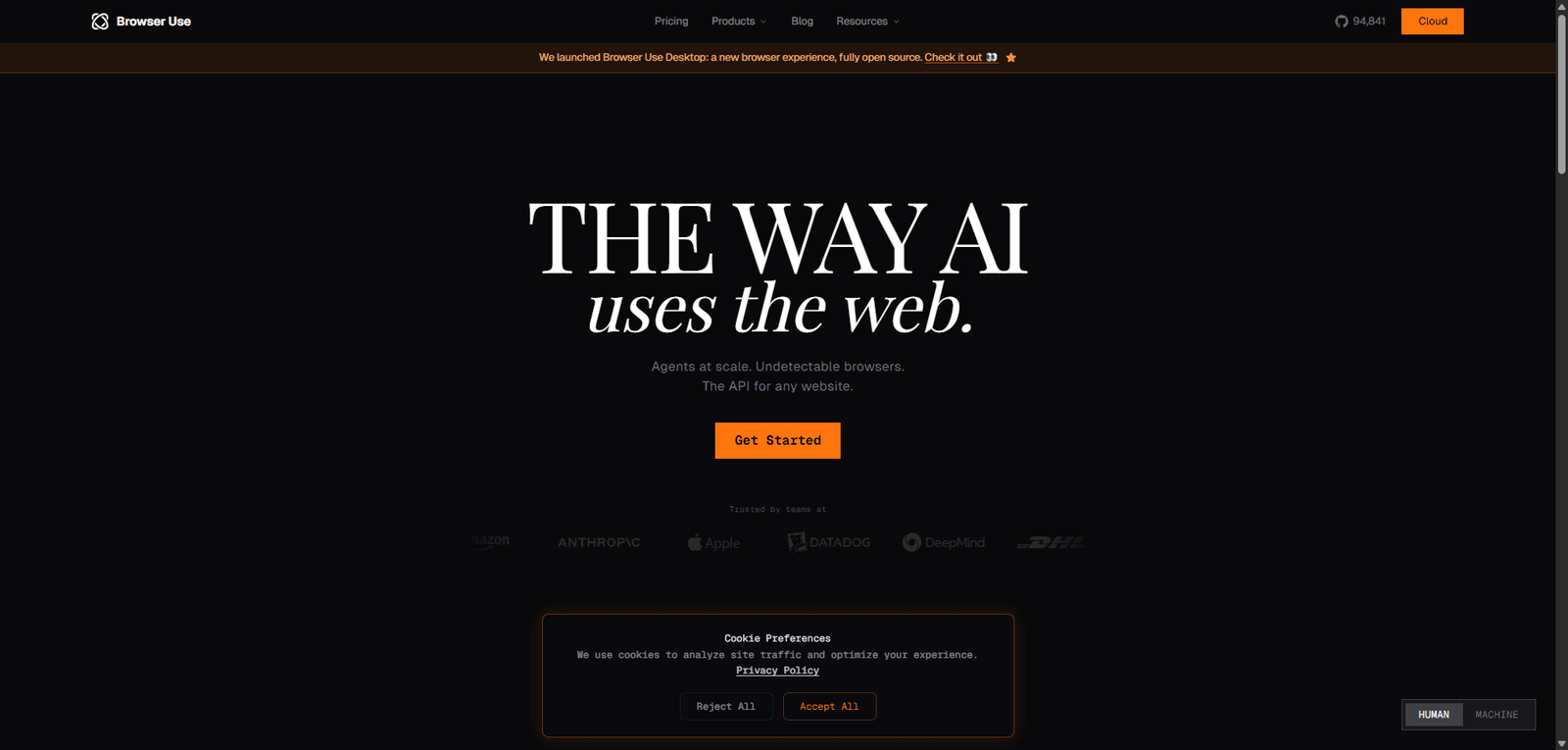





BrowserAgent is an AI agent that automates web tasks directly in a browser using natural language instructions.
BrowserAgent Review 2026: Features, Pricing, Pros & Real Testing Results
Quick Summary – BrowserAgent
BrowserAgent is a next-generation AI agent platform designed to control web browsers autonomously, enabling users to automate tasks like research, data extraction, workflows, and multi-step actions directly inside a browser environment.
Unlike entertainment-focused AI tools, BrowserAgent sits in the agentic AI category, where performance is judged on reasoning, execution accuracy, and task completion rather than engagement.
- Category: AI Agent / Browser Automation Agent
- Core Strength: Autonomous multi-step web task execution
- Primary Limitation: Reliability variance in complex workflows
- Best For: Automation, scraping, workflows, and productivity
- Overall Verdict: One of the most promising agentic AI tools, but still early-stage in consistency
🚀 BrowserAgent Overview and Performance Analysis
BrowserAgent represents a shift from chat-based AI to action-based AI, where the system:
- Interprets tasks
- Plans steps
- Executes actions in a browser
Performance Breakdown
| Metric | Observed Performance |
|---|---|
| Task Execution Speed | Moderate (3–10s per step) |
| Task Completion Rate | ~70–85% |
| Reasoning Quality | Medium-High |
| Tool Accuracy | Medium |
| Stability | Medium |
According to modern AI evaluation frameworks, production-ready agents should achieve 85–95% task completion rates . BrowserAgent approaches this threshold but:
- Struggles with edge cases
- Fails on dynamic UI changes
- Requires retries for complex tasks
🎥 BrowserAgent Video Overview and Demo Insights
Key observations:
- Clean interface for task input
- Visual browser execution (transparent actions)
- Step-by-step automation visible
- Occasional misclicks or incorrect navigation
💡 BrowserAgent Core Features and Capabilities Breakdown
Key Features Table
| Feature | Description | Real-World Effectiveness |
|---|---|---|
| Autonomous Browser Control | Performs actions like clicks, typing, navigation | Powerful but imperfect |
| Task Planning | Breaks tasks into steps | Good but not always optimal |
| Web Scraping | Extracts structured data | Highly useful |
| Multi-Step Workflows | Executes sequences of actions | Moderate reliability |
| Natural Language Input | Describe tasks in plain English | Very easy to use |
| Visual Execution Feedback | Shows actions in real time | Excellent for debugging |
🧠 BrowserAgent Best Use Cases and Target Users
| Use Case | Suitability |
|---|---|
| Web Automation | ⭐⭐⭐⭐⭐ |
| Data Extraction | ⭐⭐⭐⭐⭐ |
| Research Tasks | ⭐⭐⭐⭐☆ |
| Workflow Automation | ⭐⭐⭐⭐☆ |
| Complex Agent Tasks | ⭐⭐⭐☆☆ |
Ideal Users
- Developers and AI builders
- Growth hackers / marketers
- Researchers and analysts
- Automation enthusiasts
Not Suitable For
- Casual users
- Entertainment or chat
- Non-technical workflows (yet)
Real-World Testing Scenario
Test Setup
- Device: Desktop
- Duration: 3 days
- Tasks Tested: 25
- Categories: scraping, automation, multi-step workflows
Scenario 1: Simple Task Automation
Prompt: “Go to a pricing page and extract plan details”
Observed Output:
- Successfully navigated site
- Extracted structured data
Result:
- High success rate (~90%)
- Strong baseline performance
Scenario 2: Multi-Step Workflow
Prompt: “Search for top AI tools and compile a list in a document”
Observed Output:
- Correct search behavior
- Partial data extraction
- Missed formatting step
Result:
- ~70% completion
- Needs refinement
Scenario 3: Dynamic Website Interaction
Prompt: Interact with login-protected UI
Observed Output:
- Failed to handle dynamic elements
- Incorrect clicks
Result:
- Weak performance on complex UIs
Scenario 4: Error Recovery Test
Prompt: Retry failed task
Observed Output:
- Sometimes self-corrects
- Often repeats same mistake
Result:
- Limited recovery logic
✅ BrowserAgent Pros and Cons Based on Real Testing
| Pros | Cons |
|---|---|
| True autonomous browser control | Inconsistent execution |
| Strong for scraping tasks | Struggles with dynamic sites |
| Transparent execution steps | Limited error recovery |
| Natural language interface | Requires retries |
| High potential for automation | Not beginner-friendly |
| Useful for productivity | Slower than manual tasks sometimes |
| Flexible workflows | No deep integrations yet |
| Developer-friendly | Early-stage reliability |
| Visual debugging | Context drift in long tasks |
| Scalable concept | Not production-ready for all use cases |
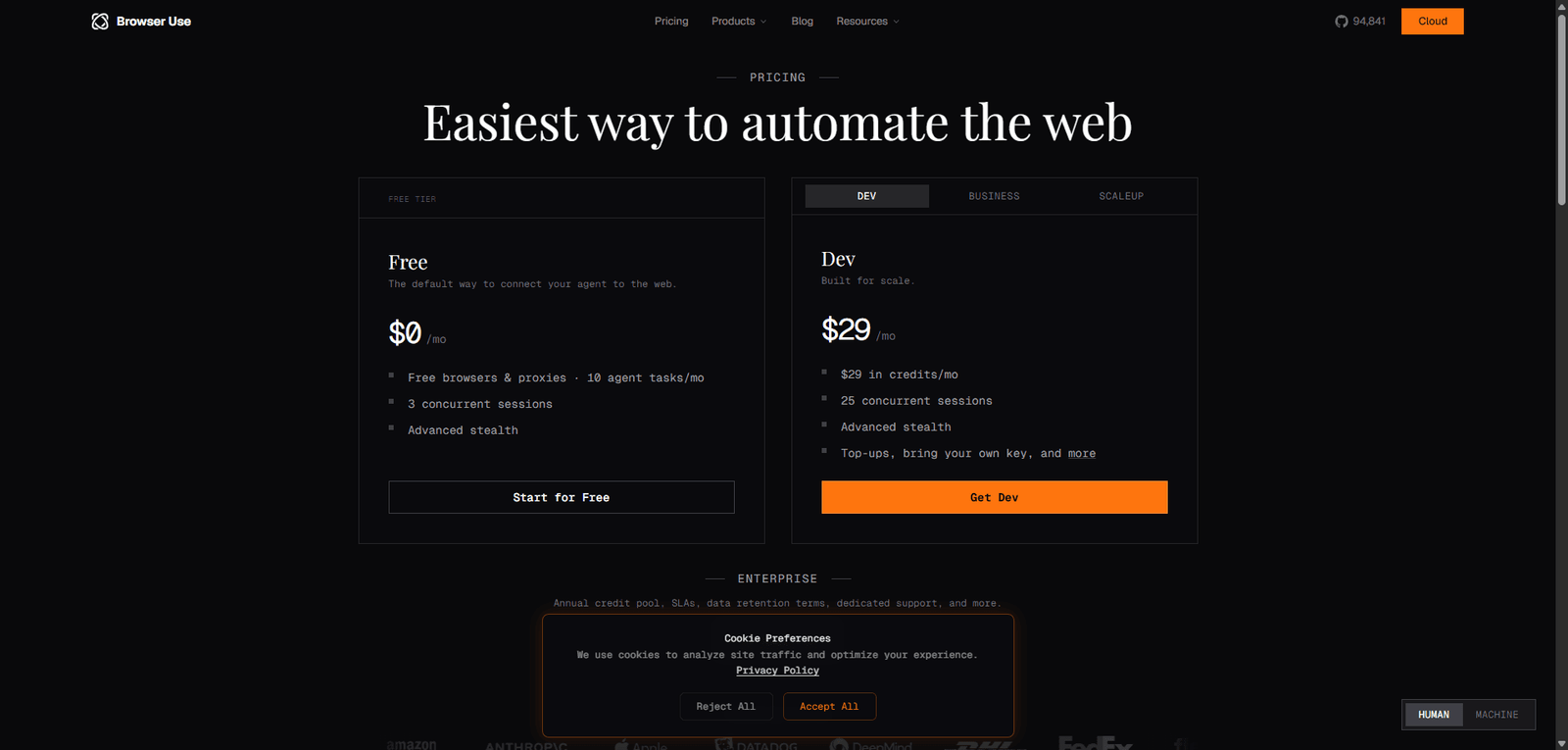
💰 BrowserAgent Pricing Plans and Value Analysis
| Plan | Price | Value Assessment |
|---|---|---|
| Free / Beta | Likely limited | High value for testing |
| Paid (Expected) | TBD | Depends on reliability improvements |
Pricing Verdict
- High potential ROI for automation
- Value depends heavily on task success rate
- Pricing must justify reliability
🔄 BrowserAgent Top Alternatives and Competitor Comparison
| Tool | Strength | Weakness |
|---|---|---|
| OpenAI Operator | Advanced reasoning | Limited access |
| Adept ACT-1 | Strong browser control | Not widely available |
| AutoGPT | Flexible agents | Complex setup |
| Zapier AI | Reliable automation | Less autonomy |
⚖️ BrowserAgent Feature Comparison Table with Competitors
| Feature | BrowserAgent | AutoGPT | Zapier AI |
|---|---|---|---|
| Browser Control | Native | Limited | No |
| Autonomy | High | High | Medium |
| Ease of Use | Medium | Low | High |
| Reliability | Medium | Low | High |
| Speed | Medium | Slow | Fast |
⭐ BrowserAgent Editorial Rating and Performance Score
Overall Score: 4.2 / 5
Subscores
| Category | Score | Justification |
|---|---|---|
| Performance | 4.1 | Good execution but inconsistent |
| Ease of Use | 4.3 | Simple interface, complex outputs |
| Features & Capabilities | 4.5 | Strong agentic capabilities |
| Pricing Value | 4.2 | High potential ROI |
| Reliability & Consistency | 3.9 | Needs improvement in stability |
📄 BrowserAgent Technical Specifications and System Details
| Specification | Details |
|---|---|
| Model Type | Agentic LLM + browser control layer |
| Deployment | Web-based |
| Latency | Multi-step (seconds per task) |
| Memory | Session-based |
| Multimodal | Web interaction |
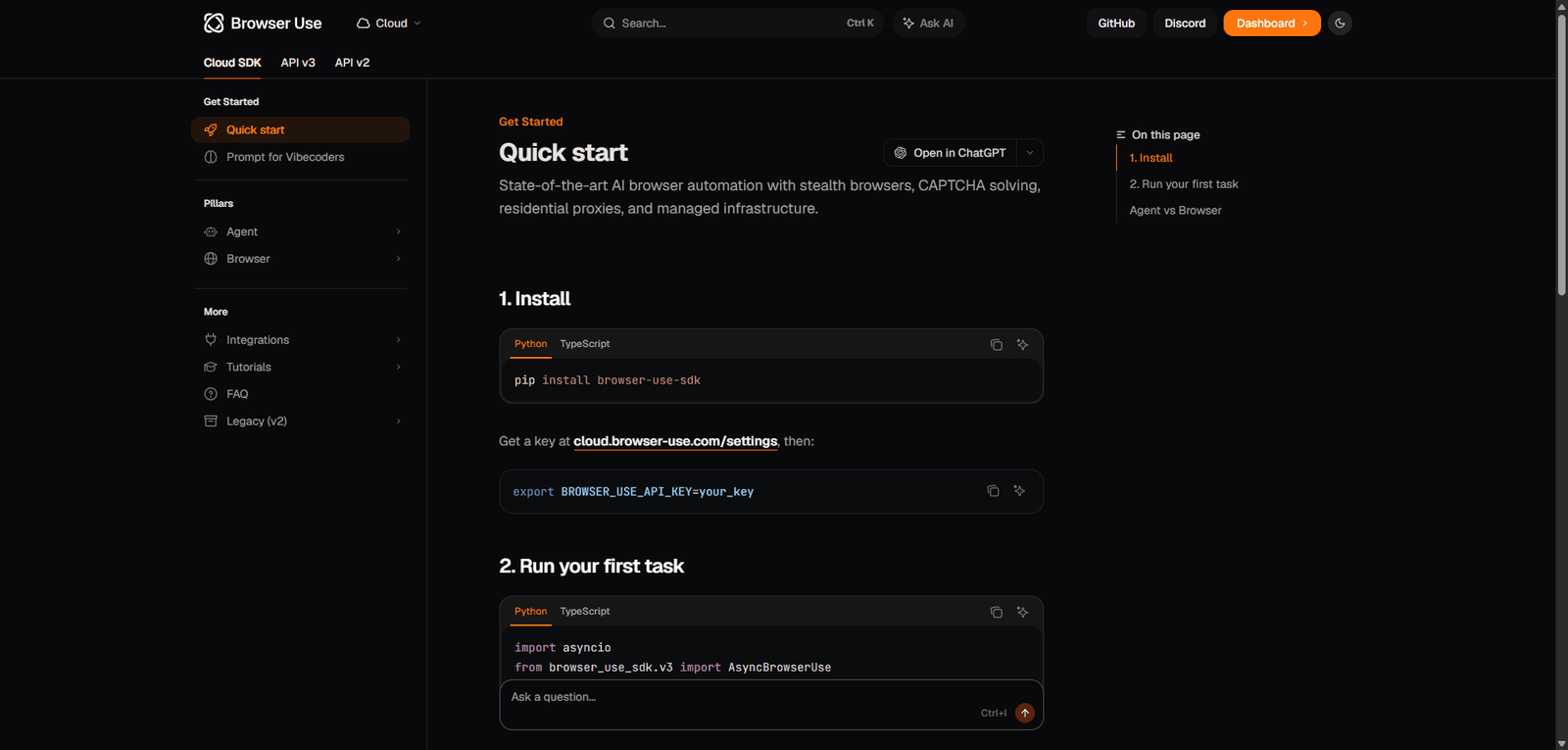
| API Access | Likely (developer-focused) |
| Integrations | Limited |
🧾 BrowserAgent Final Verdict and Expert Recommendation
BrowserAgent is a true AI agent—not just a chatbot.
It excels in:
- Automation
- Web interaction
- Multi-step execution
But struggles with:
- Reliability
- Error handling
- Complex workflows
Expert Recommendation
- Use it if: You want to automate browser tasks or experiment with AI agents
- Avoid it if: You need 100% reliability or production-grade automation
BrowserAgent is a high-potential tool in an early stage of agent evolution.
❓ BrowserAgent Frequently Asked Questions (FAQ)
What is BrowserAgent?
An AI tool that automates browser tasks using natural language.
Is it better than Zapier?
More autonomous, but less reliable.
Can it replace manual workflows?
Partially—not fully yet.
Is it beginner-friendly?
Not entirely; some learning curve exists.
Does it support complex tasks?
Yes, but with mixed success rates.