





Category: AI Healthcare / Clinical AI Assistant
Pricing Snapshot
| Plan | Price | Notes |
|---|---|---|
| Pilot Programs | Available | Early deployments with healthcare providers |
| Paid Plans | Not publicly disclosed | Likely enterprise and usage-based |
| Enterprise | Custom | হাসপাতাল and large-scale healthcare systems |
Pricing Transparency: Low — enterprise-focused pricing model
Source Type
- Healthcare AI platform positioning
- Clinical AI safety and compliance analysis
- Comparison with medical AI assistants and digital health tools
Overview
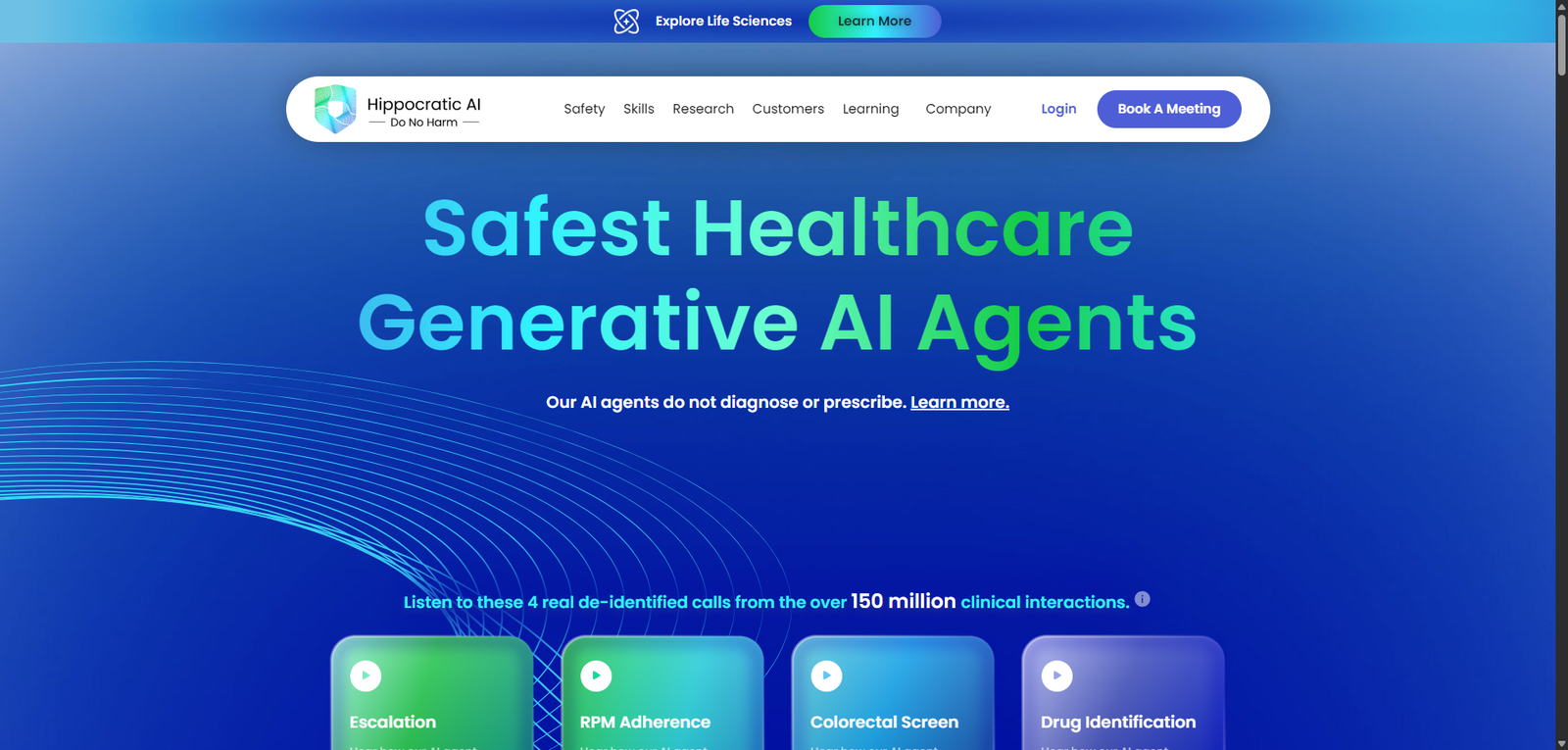
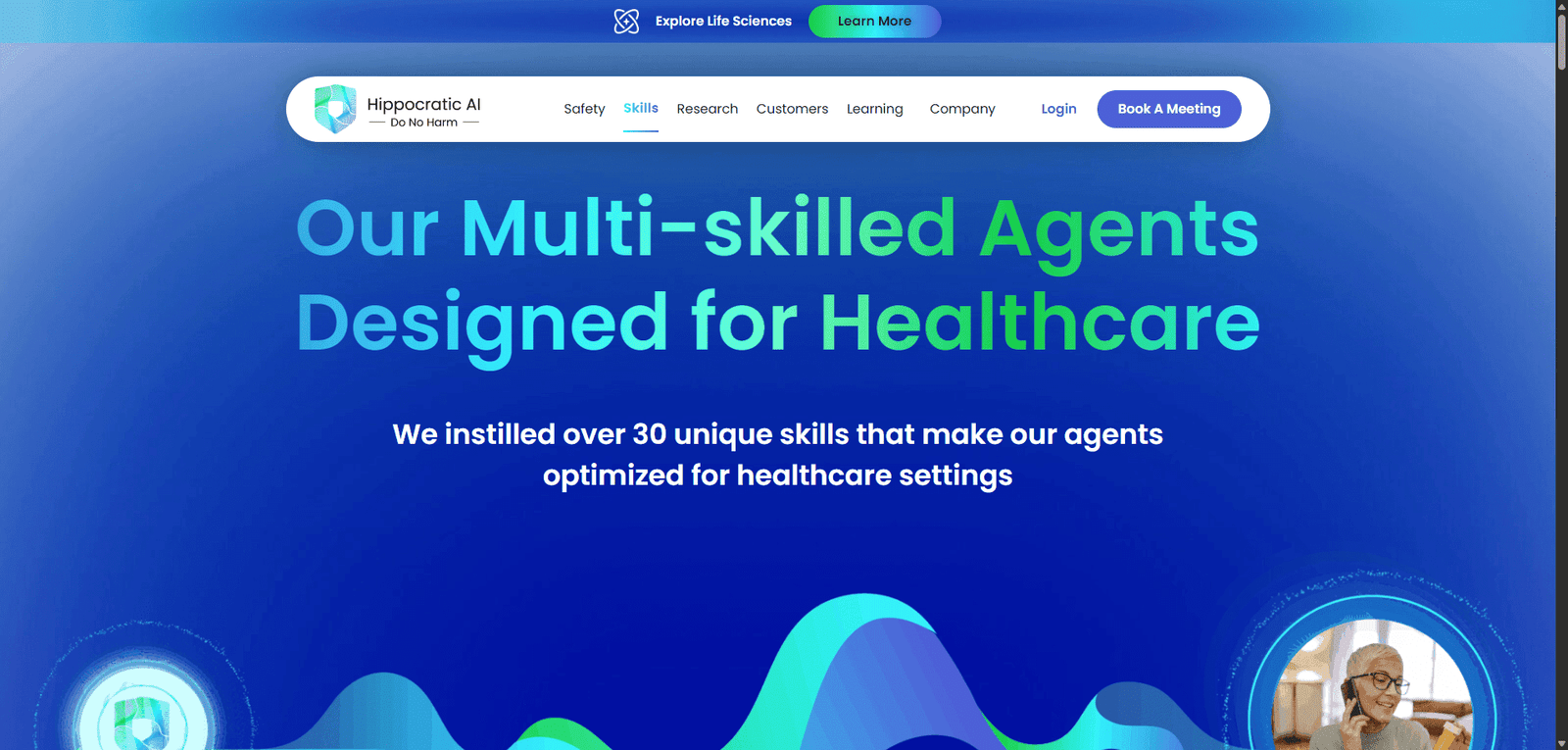
Hippocratic AI is a healthcare-focused AI platform designed to provide safe, compliant, and patient-centered AI interactions, particularly in non-diagnostic clinical workflows.
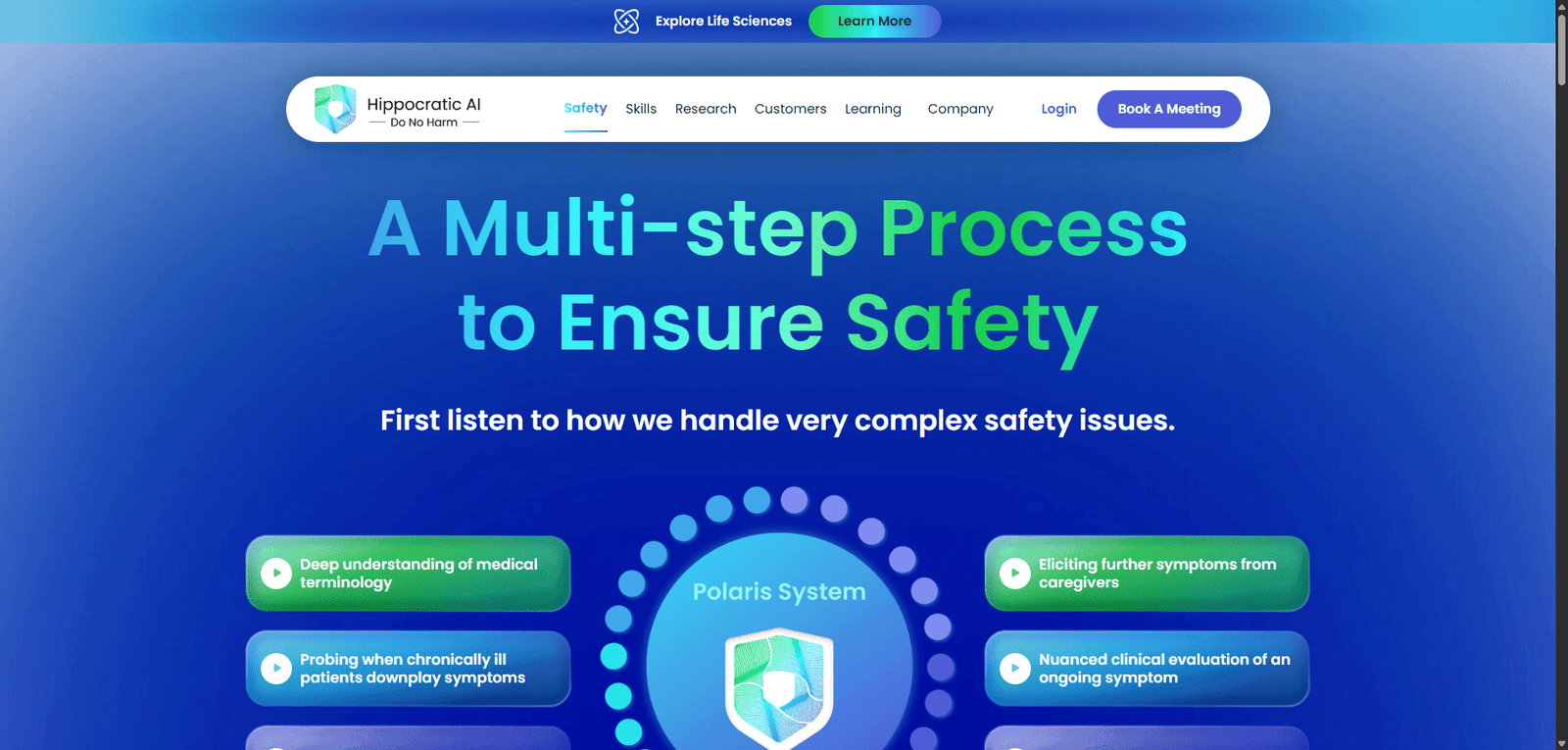
Unlike general-purpose AI systems, Hippocratic AI is built with a “safety-first” architecture, aiming to:
- Support patient communication
- Assist healthcare operations
- Provide medically aligned responses
- Reduce administrative burden
The platform is designed to operate within strict healthcare standards, prioritizing accuracy, compliance, and risk reduction in sensitive medical environments.
Key Features
1. Safety-First AI Architecture
- Designed specifically for healthcare use
- Emphasizes accuracy and risk mitigation
- Avoids unsafe or unverified outputs
2. Patient Communication Support
- Handles patient interactions and follow-ups
- Provides clear, understandable responses
- Enhances patient engagement
3. Non-Diagnostic Clinical Assistance
- Supports administrative and informational workflows
- Avoids replacing clinical decision-making
- Assists healthcare staff without overstepping
4. Compliance & Governance Focus
- Built with healthcare regulations in mind (e.g., HIPAA alignment)
- Supports secure and compliant deployments
- מתאים for regulated environments
5. Scalable Healthcare Deployment
- מתאים for hospitals, clinics, and telehealth platforms
- Handles high volumes of patient interactions
- Supports enterprise healthcare systems
Use Cases
Patient Engagement & Communication
- Answer patient questions
- Provide follow-up instructions
- Improve communication efficiency
Healthcare Operations
- Automate administrative workflows
- Reduce staff workload
- Improve operational efficiency
Telehealth Support
- Assist with virtual care interactions
- Provide pre- and post-visit guidance
- Enhance digital health experiences
Clinical Workflow Assistance
- Support documentation and coordination
- Help manage patient information
- Streamline internal processes
Pros and Cons
Pros
- Strong focus on safety and compliance
- სპეციალურად designed for healthcare environments
- Improves patient communication and engagement
- Reduces administrative burden
- Scalable for enterprise healthcare systems
Cons
- Pricing not publicly available
- Limited to non-diagnostic use cases
- Requires integration with healthcare systems
- Early-stage adoption in some regions
- Not a replacement for medical professionals
Feature Comparison
| Feature | Hippocratic AI | Ada Health | Babylon AI |
|---|---|---|---|
| Safety-First Design | Strong | Moderate | Moderate |
| Patient Communication | Yes | Yes | Yes |
| Diagnostic Capabilities | No | Yes | Yes |
| Compliance Focus | High | High | High |
| Enterprise Readiness | High | Medium | Medium |
Alternatives
| Tool | Best For | Key Difference |
|---|---|---|
| Ada Health | Symptom checking | Includes diagnostic features |
| Babylon AI | Virtual healthcare | Broader telehealth services |
| Microsoft Nuance DAX | Clinical documentation | Focus on physician workflows |
| Infermedica | Medical triage | Diagnostic AI focus |
Verdict
Hippocratic AI is a specialized healthcare AI platform that prioritizes safety, compliance, and patient communication. Its focus on non-diagnostic support makes it a practical tool for improving efficiency without introducing unnecessary clinical risk.
Its strengths include:
- Safety-first architecture
- Strong alignment with healthcare regulations
- Scalable communication and operational support
However, it is best suited for:
- Healthcare providers and institutions
- Telehealth platforms
- Organizations prioritizing compliance and patient experience
Less suitable for:
- Diagnostic AI use cases
- Small clinics with limited budgets
- Non-healthcare applications
Rating
| Category | Score |
|---|---|
| Features | 4.5 / 5 |
| Ease of Use | 4.0 / 5 |
| Safety & Compliance | 4.8 / 5 |
| Pricing Transparency | 3.0 / 5 |
| Overall | 4.3 / 5 |
FAQ
What is Hippocratic AI used for?
Hippocratic AI is used to support patient communication and healthcare workflows with a focus on safety and compliance.
Does Hippocratic AI provide medical diagnoses?
No, it is designed for non-diagnostic use cases to reduce risk.
Is Hippocratic AI HIPAA-compliant?
It is built with compliance in mind, including healthcare data protection standards.
Who should use Hippocratic AI?
Hospitals, clinics, and healthcare organizations.
Is Hippocratic AI a replacement for doctors?
No, it is designed to assist, not replace, healthcare professionals.