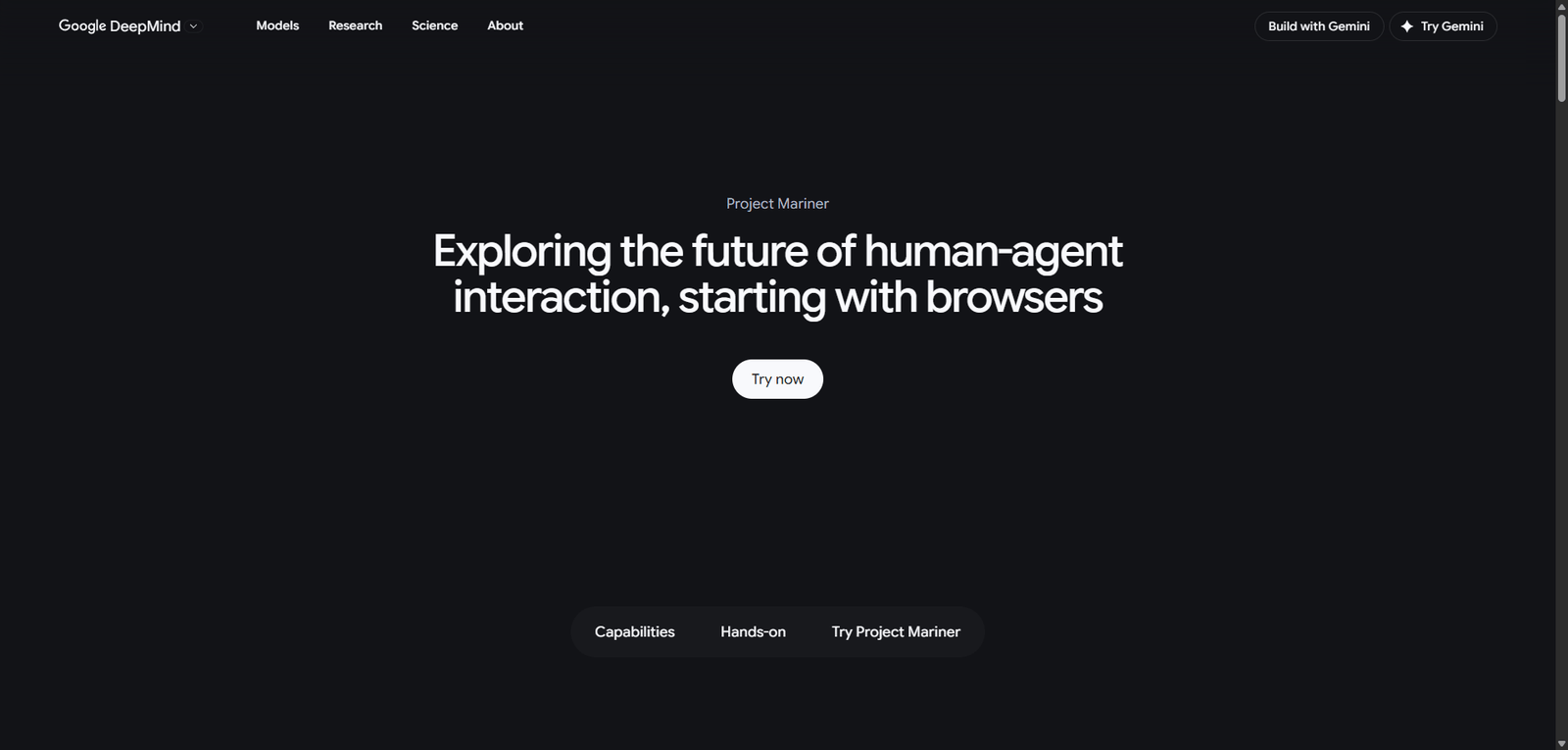


Project Mariner is an experimental AI web automation agent that demonstrates the future of autonomous browsing and task execution. While not yet production-ready, it highlights the potential of AI agents replacing manual web interaction, making it a key development to watch in the evolution of automation.
Category: Web Automation / AI Agents
Pricing Snapshot
| Plan | Price | Notes |
|---|---|---|
| Experimental Access | Limited | Currently in research/preview phase |
| Public Pricing | Not available | No official pricing released |
| Enterprise | Not announced | Likely future offering |
Pricing Transparency: N/A — early-stage experimental project
Source Type
- Experimental AI agent research (browser automation)
- Emerging AI agent and web automation trends
- Comparison with autonomous AI browsing tools
Overview
Project Mariner is an experimental AI web automation agent developed to autonomously browse the internet, interact with websites, and complete tasks on behalf of users.
Unlike traditional automation tools, Project Mariner is designed to:
- Understand web pages visually and contextually
- Navigate and interact with sites like a human user
- Execute multi-step tasks autonomously
- Operate using natural language instructions
It represents a next-generation AI agent concept, aiming to move beyond scripted automation toward fully autonomous digital assistants capable of real-world web interaction.
Key Features
1. Autonomous Web Browsing
- Navigates websites independently
- Clicks, scrolls, and interacts with elements
- Performs tasks across different pages
2. Multimodal Understanding
- Interprets visual layouts and UI elements
- Understands text, buttons, and forms
- Mimics human browsing behavior
3. Natural Language Task Execution
- Accepts instructions in plain English
- Converts intent into actions
- Eliminates need for coding
4. Multi-Step Workflow Handling
- Completes complex sequences of actions
- Works across multiple websites
- Automates end-to-end tasks
5. Adaptive Decision-Making
- Adjusts to dynamic web environments
- Handles unexpected changes
- Improves success rates over time
6. Research & Productivity Applications
- Automates online research
- Completes repetitive tasks
- Enhances productivity workflows
Use Cases
Web Task Automation
- Booking services, filling forms, navigating sites
- Automating repetitive browsing tasks
- Reducing manual effort
Research & Data Gathering
- Collecting information across sources
- Automating research workflows
- Summarizing findings
Business Process Automation
- Handling online workflows
- Automating operational tasks
- Improving efficiency
AI Agent Development
- Exploring autonomous agent capabilities
- Testing next-gen AI workflows
- Building future automation systems
Pros and Cons
Pros
- Cutting-edge autonomous AI agent technology
- Multimodal understanding of web interfaces
- Natural language-driven automation
- Handles complex, multi-step workflows
- Represents future of web automation
Cons
- Not publicly available as a product
- Experimental and evolving
- Reliability may vary
- No pricing or commercial structure
- Limited real-world deployment (currently)
Feature Comparison
| Feature | Project Mariner | MultiOn | Dobrowser |
|---|---|---|---|
| Autonomous Agents | Yes | Yes | Yes |
| Multimodal Understanding | Yes | Limited | Limited |
| Natural Language Input | Yes | Yes | Yes |
| Workflow Complexity | Very High | High | Medium |
| Commercial Availability | No | Limited | Yes |
Alternatives
| Tool | Best For | Key Difference |
|---|---|---|
| MultiOn | Autonomous browsing | More accessible product |
| Dobrowser | Workflow automation | More structured automation |
| UiPath | Enterprise RPA | Rule-based, less AI-driven |
| AutoGPT Agents | Experimental AI | Less stable but flexible |
Verdict
Project Mariner is a highly innovative AI web automation project that showcases the future of autonomous agents capable of navigating and interacting with the web like humans.
Its strengths include:
- Advanced multimodal understanding
- Autonomous decision-making
- Ability to handle complex workflows
However, limitations are significant:
- Not yet a commercial product
- Limited accessibility
- Still in experimental stages
Best suited for:
- AI researchers and developers
- Early adopters exploring agent technology
- Organizations tracking future automation trends
Not ideal for:
- Immediate business use
- Production environments
- Users needing stable tools today
Rating
| Category | Score |
|---|---|
| Features | 4.9 / 5 |
| Ease of Use | 4.3 / 5 |
| Innovation | 5.0 / 5 |
| Availability | 2.0 / 5 |
| Overall | 4.3 / 5 |
FAQ
What is Project Mariner?
Project Mariner is an experimental AI agent designed to browse and interact with the web autonomously.
Is Project Mariner available to the public?
No, it is currently in a research or preview phase.
Does it require coding?
No, it uses natural language instructions.
How is it different from RPA tools?
It uses AI and multimodal understanding instead of rule-based automation.
Who should follow Project Mariner?
AI researchers, developers, and businesses interested in future automation trends.